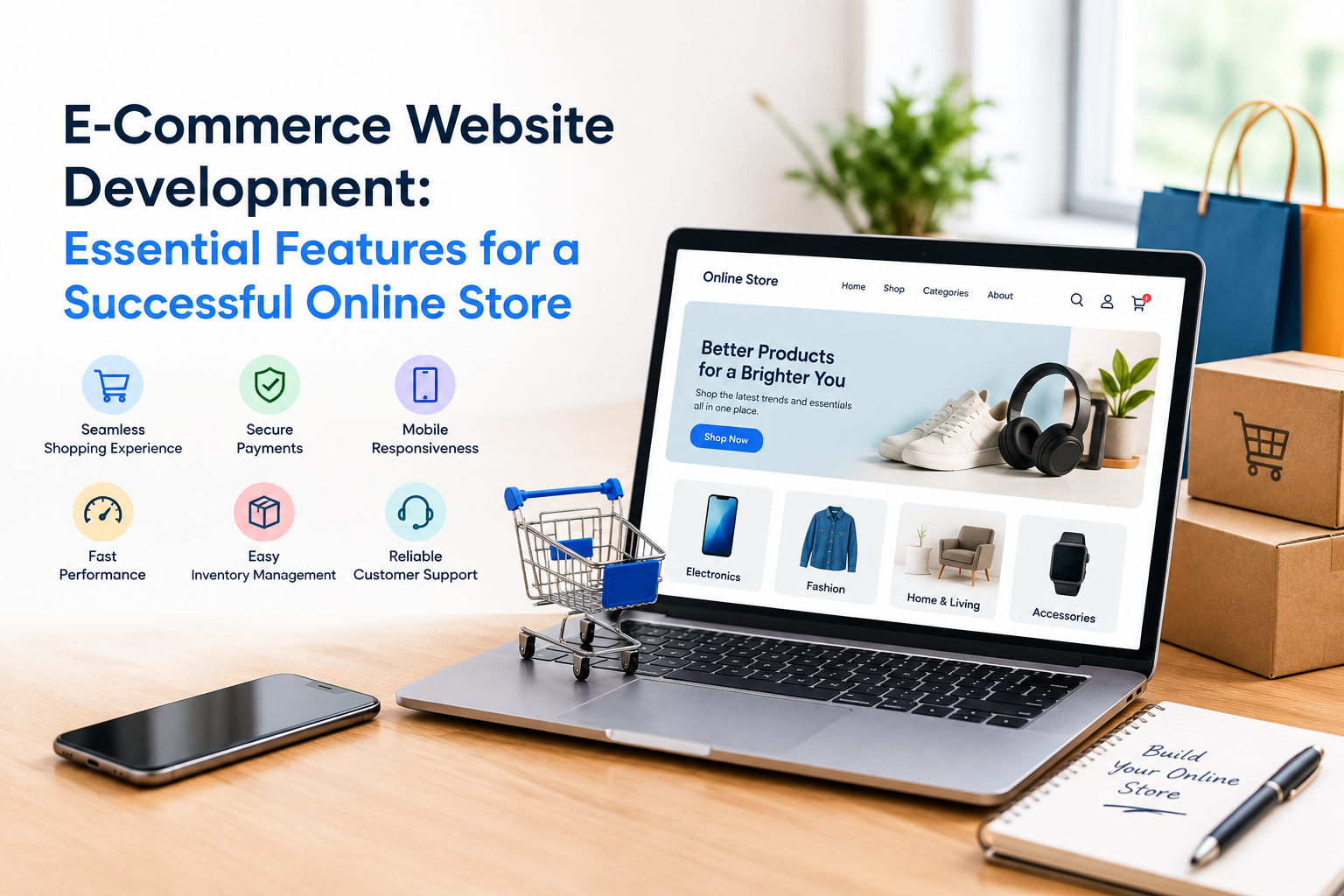
E-Commerce Website Development: Essential Features for a Successful Online Store
E-Commerce Website Development: Essential Features for a Successful Online Store
The way customers shop has changed significantly. Today, businesses need more than a basic website to sell products online. A successful e-commerce store should provide a smooth shopping experience, secure transactions, fast performance, easy product management, and the flexibility to support business growth.
A professionally developed e-commerce website brings these elements together in one platform. From product discovery and shopping carts to payment processing and order management, every part of the website can influence customer experience and conversions.
For businesses planning to launch or upgrade an online store, understanding the essential features of e-commerce website development is an important first step.
1. Responsive and Mobile-Friendly Design
A large portion of online shopping takes place on smartphones and tablets. Therefore, an e-commerce website should work smoothly across desktops, tablets, and mobile devices.
A responsive design should provide:
- Easy navigation on smaller screens
- Mobile-friendly product pages
- Readable product information
- Simple checkout forms
- Touch-friendly buttons
- Fast-loading pages
A consistent experience across devices helps customers browse products and complete purchases without unnecessary friction.
2. Easy Product Search and Navigation
Customers should be able to find products quickly. A well-structured navigation system can make a significant difference, especially for stores with large product catalogues.
Important features include:
- Product categories and subcategories
- Search functionality
- Filters and sorting
- Product attributes and variants
- Related product recommendations
- Clear product menus
Search and filtering should help customers move from browsing to purchasing with fewer steps.
3. Detailed Product Pages
Product pages are one of the most important parts of an online store. Customers cannot physically examine products, so the website needs to provide enough information to support their purchasing decision.
A professional product page can include:
- High-quality product images
- Multiple image views
- Product descriptions
- Specifications
- Pricing and discounts
- Available sizes, colors, or variants
- Stock availability
- Customer reviews
- Delivery information
- Return and refund information
Clear and accurate product information can also reduce confusion and unnecessary returns.
4. Secure Shopping Cart and Checkout
A complicated checkout process can cause customers to abandon their purchases. The shopping cart and checkout experience should therefore be simple, clear, and secure.
A well-designed checkout should allow customers to:
- Review selected products
- Update quantities
- Apply coupons
- Enter shipping information
- Select payment methods
- Review the final order
- Complete payment securely
Reducing unnecessary steps can create a smoother purchasing journey.
5. Secure Payment Gateway Integration
Payment security is essential for every e-commerce business. Customers need confidence that their payment and personal information are being handled securely.
Depending on the target market, an e-commerce website may integrate multiple payment options such as cards, digital wallets, bank-based payments, and other supported payment methods.
RioTech's e-commerce development services include secure payment gateway integration designed to support smoother customer transactions.
6. Inventory and Order Management
Managing products manually becomes difficult as an online store grows. An effective e-commerce platform should provide an administrative system for managing inventory and orders.
Useful capabilities include:
- Product creation and editing
- Stock management
- Product variants
- Order tracking
- Order status updates
- Customer information
- Inventory alerts
- Sales records
Inventory management helps businesses maintain accurate stock information and organize day-to-day operations more efficiently.
7. Customer Account Management
Customer accounts can make repeat purchases easier while giving shoppers access to their order information.
Depending on the business model, account functionality can include:
- Customer registration and login
- Order history
- Saved addresses
- Wishlist
- Profile management
- Order tracking
- Saved preferences
These features can contribute to a more personalized shopping experience.
8. SEO-Friendly Architecture
Building an online store is only part of the process. Customers also need to be able to discover the products through search engines.
An SEO-friendly e-commerce website should have:
- Clean and descriptive URLs
- Optimized page titles and meta descriptions
- Proper heading structure
- Product-focused content
- Image optimization
- Internal linking
- Mobile-friendly pages
- Fast-loading architecture
- Structured product information where appropriate
SEO should be considered during development rather than treated as an afterthought.
9. Website Speed and Performance
Performance directly affects the user experience. Slow-loading product pages can make browsing frustrating and may discourage customers from completing their purchases.
Developers should consider:
- Image compression
- Efficient code
- Browser caching
- Optimized databases
- Content delivery networks where appropriate
- Lightweight page components
- Performance monitoring
A fast and responsive website creates a better environment for customers to browse and purchase products.
10. Analytics and Sales Tracking
Business owners need data to understand how their online store is performing.
An e-commerce platform can integrate analytics and reporting features to monitor areas such as:
- Website traffic
- Product performance
- Orders
- Revenue
- Customer behaviour
- Conversion activity
- Sales trends
RioTech's e-commerce offering includes sales and analytics capabilities for tracking orders, customer behaviour, and business growth.
11. Strong Security
E-commerce websites handle valuable information, including customer accounts, order details, and payment-related data. Security should therefore be considered throughout the development process.
Important security measures can include:
- SSL/HTTPS
- Secure authentication
- Strong password protection
- Access control
- Regular software updates
- Secure database practices
- Backup systems
- Monitoring for suspicious activity
Security is not a one-time implementation. It should be continuously maintained as the website evolves.
12. Scalable Technology
An online store that works for 100 products may need a different architecture when it grows to thousands of products and significantly higher traffic.
A scalable e-commerce platform should be designed to support future requirements such as:
- Larger product catalogues
- More customers
- Higher order volumes
- Additional payment methods
- Third-party integrations
- Multiple sales channels
- Advanced analytics
- Business automation
Planning for scalability from the beginning can reduce the need for expensive redevelopment later.
Why Professional E-Commerce Development Matters
An e-commerce website is more than an online catalogue. It is a complete digital sales platform that connects customers, products, payments, inventory, orders, and business data.
Professional e-commerce development focuses on creating a platform that is:
- User-friendly
- Secure
- Mobile-responsive
- SEO-friendly
- Fast
- Scalable
- Easy to manage
- Ready for business growth
RioTech provides e-commerce development solutions focused on modern online stores, secure payment systems, product management, inventory management, and analytics.
Conclusion
A successful online store requires more than attractive design. Customers expect fast browsing, accurate product information, convenient checkout, secure payments, and reliable service.
By investing in the right e-commerce website features from the beginning, businesses can create a stronger digital shopping experience while building a platform that can support future growth.
If you are planning to launch a new online store or improve an existing e-commerce platform, explore RioTech's E-Commerce Development Services for solutions designed around modern online business requirements.
Build a smarter online store with RioTech Softwares.