AI-Native Software Development in 2026: Trends, Benefits & Future
AI-Native Software Development in 2026: How AI Is Transforming the Way Businesses Build Software
Artificial intelligence is no longer limited to chatbots, content generation, or basic automation. In 2026, AI is becoming increasingly integrated into the way businesses design, develop, test, deploy, and manage software.
The rise of AI-native software development represents a major shift in the software industry. Instead of simply adding AI features to traditional applications, businesses are increasingly building applications and development processes around AI from the beginning.
Gartner identifies AI-native development platforms as one of its strategic technology trends for 2026, while its research also highlights the growing importance of AI-powered technologies across the software development lifecycle.
For businesses looking to improve productivity, accelerate innovation, and deliver better digital experiences, understanding this shift is becoming increasingly important.
What Is AI-Native Software Development?
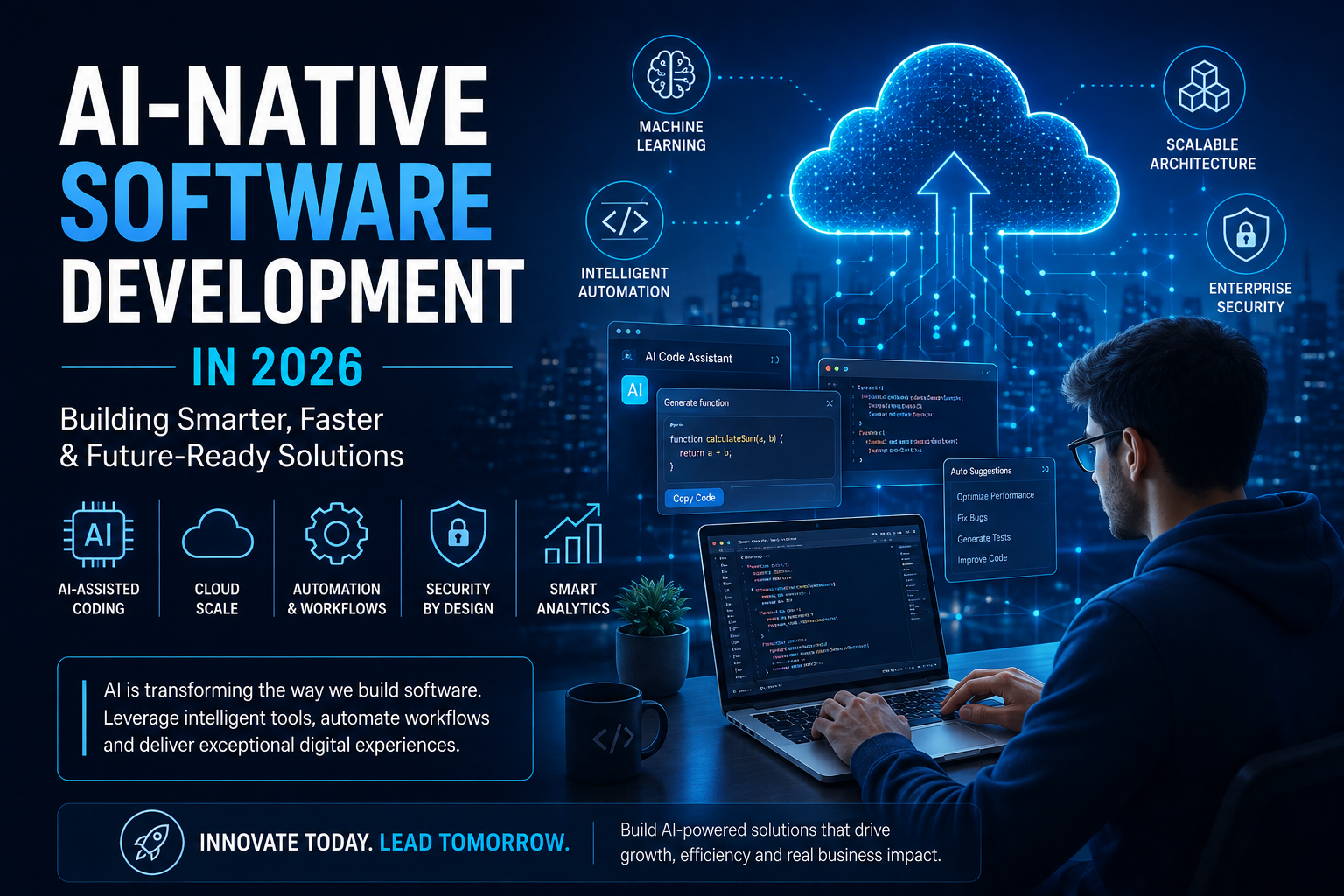
AI-native software development refers to an approach where artificial intelligence is integrated deeply into the software development process and, in many cases, into the architecture of the final product.
Traditional software development typically follows a process involving:
- Requirement analysis
- UI/UX design
- Coding
- Testing
- Deployment
- Maintenance
With AI-native development, AI can support or automate parts of these activities.
For example, AI-powered development tools can assist developers with code generation, debugging, documentation, testing, code review, and application optimization.
The result is not simply faster coding. The larger objective is to create a development environment where human expertise and AI capabilities work together.
Why AI-Native Development Matters in 2026
Businesses are under increasing pressure to deliver software faster while controlling development costs and maintaining quality.
- At the same time, software requirements are becoming more complex.
- Customers expect:
- Faster digital experiences
- Personalized services
- Intelligent automation
- Seamless mobile and web applications
- Real-time insights
- Secure digital platforms
AI-native development can help development teams respond to these requirements more efficiently.
Gartner estimates worldwide AI spending will reach $2.59 trillion in 2026, representing 47% growth year over year. The forecast also points to increasing enterprise use of generative AI and AI agents across workflows.
This indicates that AI is becoming a major component of business technology investment rather than simply an experimental technology.
Key AI Software Development Trends in 2026
1. AI-Assisted Coding
AI coding assistants are changing how developers write and review software.
Developers can use AI to:
- Generate code
- Explain existing code
- Identify potential bugs
- Suggest improvements
- Create test cases
- Generate documentation
- Refactor repetitive code
However, AI-generated code still requires human review, testing, security validation, and architectural oversight.
The strongest development model is therefore not AI replacing developers but developers working with AI as a productivity layer.
2. AI-Native Development Platforms
AI-native development platforms are designed to use AI throughout the application development process.
These platforms can help teams move from requirements to working software more efficiently.
They can support activities such as:
- Application design
- Code generation
- Testing
- Documentation
- Debugging
- Deployment
- Application maintenance
Gartner describes AI-native development platforms as a significant 2026 technology trend because they can improve developer productivity and enable organizations to create software more efficiently.
3. Agentic AI and Autonomous Workflows
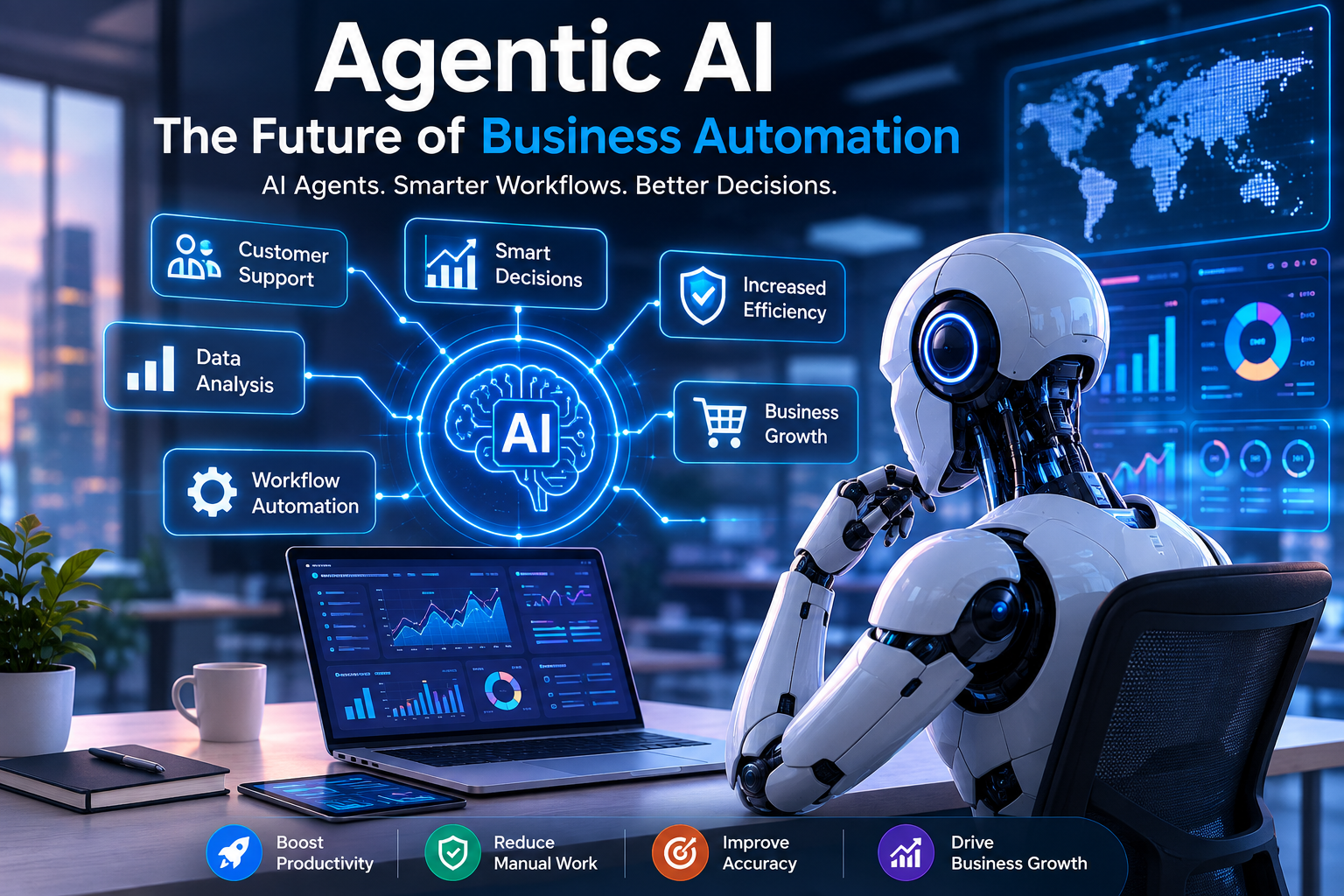
Another important development is the growth of agentic AI.
Unlike conventional AI tools that respond to individual prompts, AI agents can potentially plan and execute multiple steps toward a defined objective.
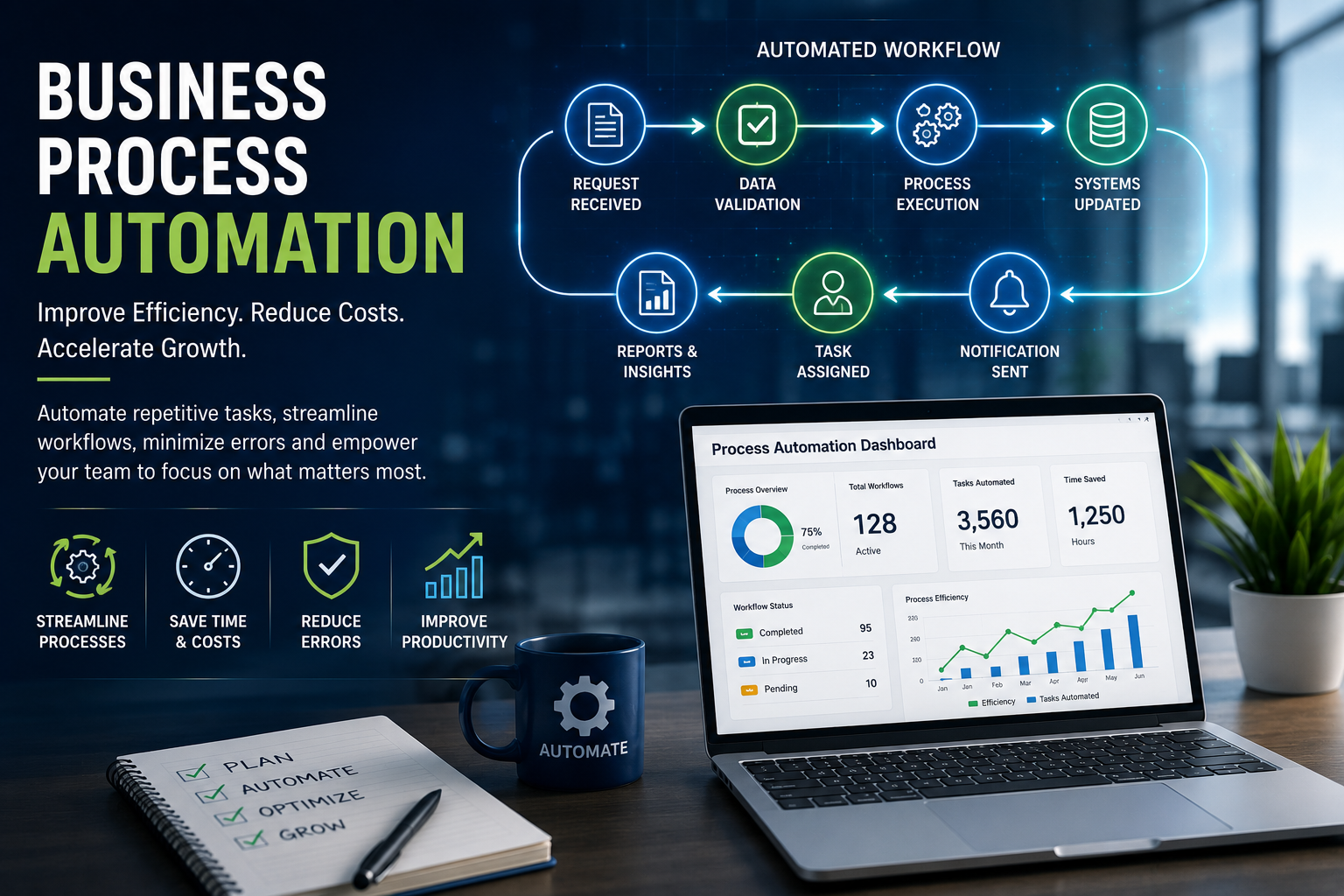
For example, an AI-enabled business workflow could:
- Receive a customer request.
- Analyze the information.
- Retrieve relevant business data.
- Determine the appropriate action.
- Update an internal system.
- Generate a response.
- Escalate the case when human intervention is required.
This creates opportunities for businesses to automate complex workflows rather than individual tasks.
McKinsey's 2026 technology research highlights agentic AI as part of the shift toward organizations integrating AI and data into their operating models.
4. AI-Powered Application Testing
Testing is another area being transformed by AI.
AI can assist development teams in identifying:
- Functional errors
- Regression issues
- Security vulnerabilities
- Performance problems
- Edge cases
- User experience issues
Automated testing can reduce repetitive manual work and help teams identify problems earlier in the development lifecycle.
For businesses, this can contribute to faster releases while maintaining software quality.
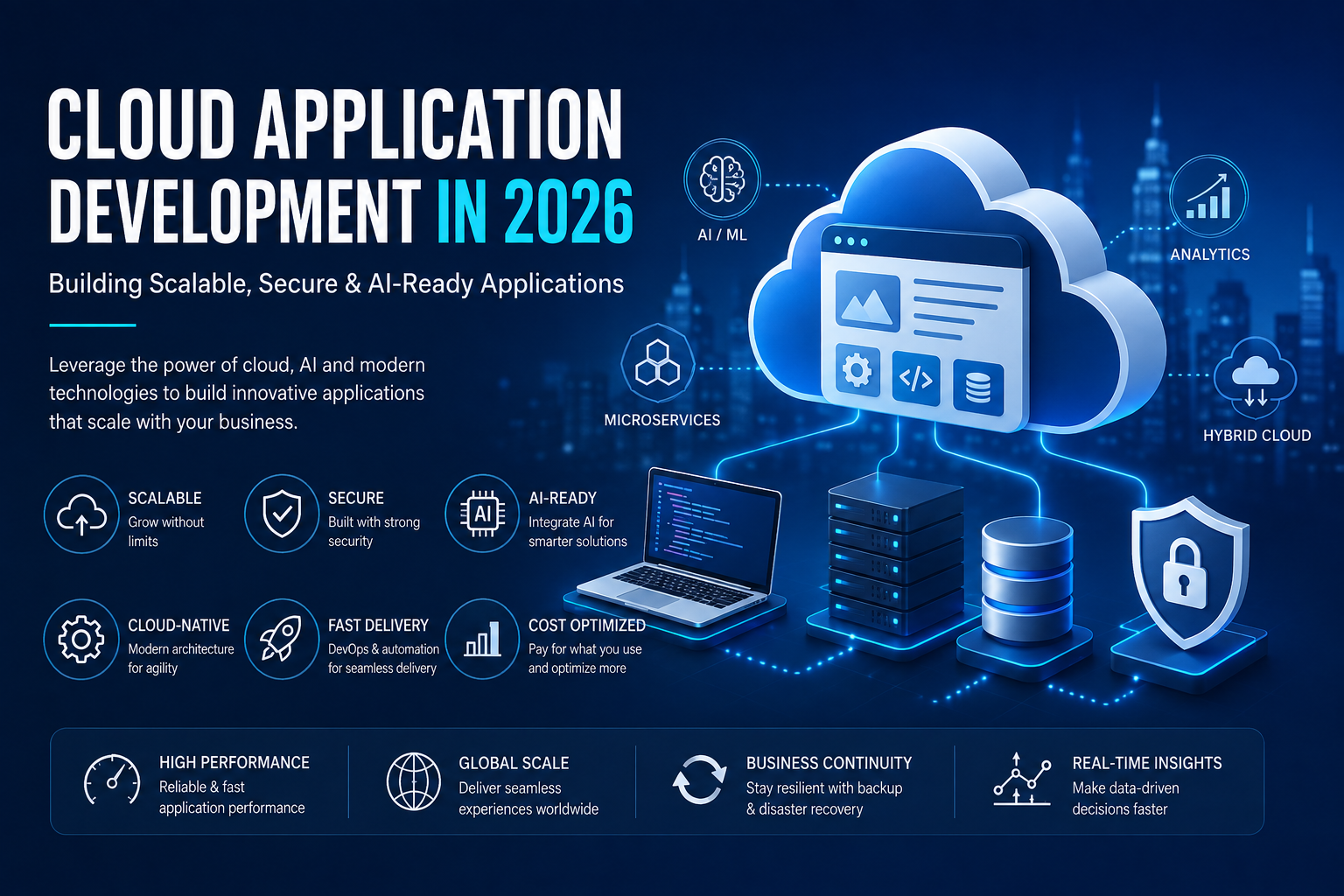
5. AI and Cloud Application Development
AI workloads require scalable infrastructure, and this is increasing the importance of cloud platforms.
Businesses are increasingly combining:
AI + Cloud + Data + Automation
to create scalable digital platforms.
India is also seeing strong growth in cloud spending. Gartner forecasts Indian end-user public cloud spending to reach $17.5 billion in 2026, up from $13.7 billion in 2025, with AI-ready infrastructure and application modernization among the factors driving demand.
For growing businesses, cloud-based application development can provide the flexibility needed to scale AI-enabled applications as demand increases.
6. AI Security Is Becoming Essential
Greater AI adoption also introduces new security challenges.
Businesses need to consider risks such as:
- Data leakage
- Unauthorized AI access
- Prompt injection
- Insecure integrations
- Improper model usage
- AI-generated vulnerabilities
- Unauthorized automated actions
Gartner's 2026 strategic technology trends include AI security platforms and preemptive cybersecurity as important areas for organizations adopting AI.
Therefore, security should not be treated as an afterthought. It should be integrated into the architecture and development lifecycle from the beginning.
Benefits of AI-Native Software Development
Faster Development Cycles
AI can automate repetitive development activities and assist developers with coding, testing, documentation, and debugging.
This can help organizations reduce development time.
Improved Developer Productivity
Developers can focus more on architecture, business logic, problem-solving, and innovation while AI handles repetitive tasks.
Better Automation
AI can connect multiple business processes and automate workflows that previously required significant manual effort.
Scalable Solutions
When combined with cloud infrastructure, AI-enabled applications can be designed to support changing workloads and growing user demand.
Personalized Customer Experiences
AI can analyze customer behavior and business data to support personalized recommendations, intelligent search, conversational interfaces, and automated customer support.
Data-Driven Decision Making
AI-powered applications can process large volumes of data and convert it into useful insights for business teams.
Challenges Businesses Should Consider
AI-native software development offers significant opportunities, but businesses should approach adoption strategically.
Data Quality
AI systems depend heavily on the quality and reliability of the data they use.
Security
Sensitive business information must be protected through appropriate security controls and access policies.
Human Oversight
AI-generated code and automated decisions should be reviewed and validated where business or security risks are significant.
Integration
Connecting AI capabilities with existing applications, databases, APIs, and enterprise systems can require careful architecture.
Cost Management
AI infrastructure and model usage can create additional costs. Businesses should monitor usage and optimize infrastructure according to actual requirements.
Governance
Organizations should establish clear policies around AI usage, data protection, model access, monitoring, and accountability.
How Businesses Can Prepare for AI-Native Development
Businesses do not need to transform their entire technology environment overnight.
A practical approach is to start with specific, high-value use cases.
Step 1: Identify Repetitive Processes
Find development and business processes involving repetitive manual work.
Step 2: Select Suitable AI Use Cases
Evaluate where AI can provide measurable value, such as development assistance, customer support, analytics, testing, or workflow automation.
Step 3: Build a Secure Architecture
Plan data access, authentication, authorization, monitoring, and security controls before deploying AI.
Step 4: Start With a Pilot Project
Test the technology on a controlled project before implementing it across the organization.
Step 5: Measure Results
Track metrics such as:
- Development time
- Operational cost
- Productivity
- Error rates
- Customer satisfaction
- Response time
- Infrastructure usage
Step 6: Scale Strategically
Once the business case is validated, expand AI adoption across additional applications and workflows.
The Future of Software Development
The future of software development will likely be shaped by collaboration between humans and intelligent systems.
AI can increasingly handle repetitive and computationally intensive tasks, while developers remain responsible for architecture, business understanding, security, quality, and strategic decisions.
This shift could lead to smaller, highly productive development teams capable of building more sophisticated applications.
The objective should not be to use AI simply because it is trending. Businesses should adopt AI where it solves real problems, improves measurable outcomes, and creates sustainable value.
Final Thoughts
AI-native software development is becoming one of the most important technology shifts of 2026.
From AI-assisted coding and intelligent testing to agentic workflows, cloud application development, and AI security, businesses are moving toward software environments where intelligence is integrated into both development processes and digital products.
Organizations that approach this transformation strategically can improve development productivity, automate repetitive processes, enhance customer experiences, and build more scalable digital solutions.
The key is to combine AI capabilities with strong software engineering, secure architecture, reliable data, and human expertise.
Frequently Asked Questions
What is AI-native software development?
AI-native software development is an approach where artificial intelligence is deeply integrated into the software development process and, often, into the software product itself.
Is AI replacing software developers?
AI is primarily being used to assist developers with coding, testing, debugging, documentation, and other repetitive activities. Human developers remain important for architecture, security, business logic, validation, and decision-making.
What are the major AI development trends in 2026?
Major trends include AI-native development platforms, AI-assisted coding, agentic AI, AI-powered testing, cloud-based AI applications, AI security, and intelligent automation.
How can AI improve software development?
AI can help automate repetitive tasks, generate and review code, identify bugs, create tests, analyze data, and accelerate parts of the development lifecycle.
Is AI-native development suitable for small businesses?
Yes. Small businesses can begin with targeted applications such as customer support automation, workflow automation, intelligent analytics, or AI-assisted software development rather than attempting a complete technology transformation.
Build Smarter Digital Solutions With Riotech
The right technology strategy can help businesses transform ideas into scalable, secure, and high-performing digital solutions.
Riotech can help businesses explore modern approaches to software development, web application development, cloud solutions, AI integration, automation, and digital transformation.
Ready to build your next digital solution? Contact Riotech to discuss your requirements and explore the right technology approach for your business.