Agentic AI in 2026: How AI Agents Are Transforming Business Automation
Agentic AI in 2026: How AI Agents Are Transforming Business Automation
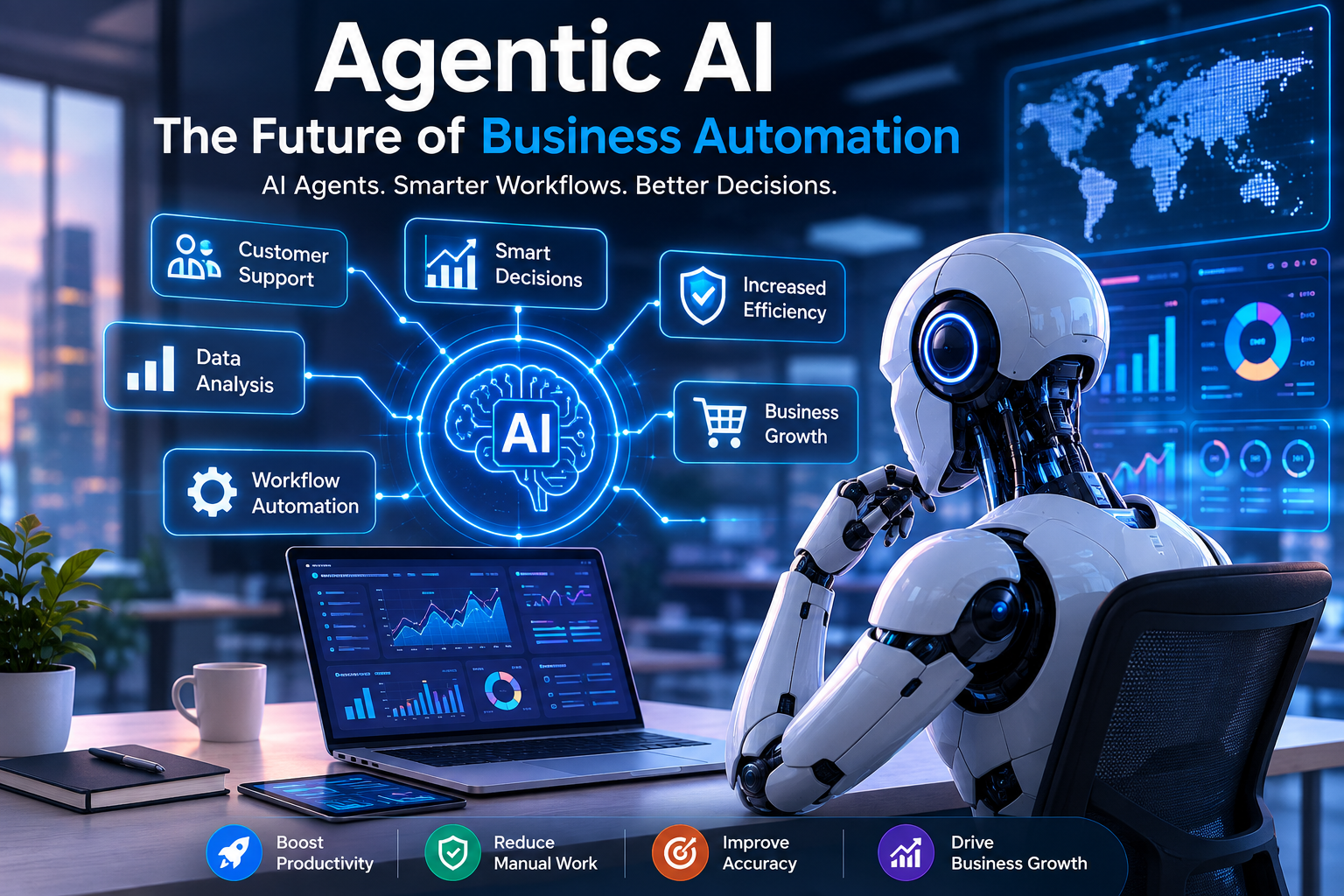
Artificial intelligence has moved beyond simple chatbots and content-generation tools. In 2026, businesses are increasingly exploring agentic AI—AI systems designed to understand objectives, plan multiple steps, use connected tools and take actions with limited human intervention.
This represents an important shift in enterprise software. Instead of simply asking AI to generate an answer, organizations can use AI agents to execute parts of an entire business workflow.
Google Cloud describes 2026 as a transition toward the agentic enterprise, where AI agents can proactively handle complex processes rather than functioning only as basic assistants.
What Is Agentic AI?
Agentic AI refers to AI systems that can work toward a defined objective by reasoning through tasks, selecting appropriate actions and interacting with software or data sources.
A traditional AI application might answer:
“What is the status of this customer order?”
An AI agent could potentially:
- Retrieve the order information.
- Check inventory or logistics systems.
- Identify a delay.
- Notify the customer.
- Create an internal support ticket.
- Escalate the issue when human approval is required.
The difference is important: AI agents are designed not only to respond, but also to act.
Why Agentic AI Is Becoming Important in 2026
Organizations are under pressure to improve productivity while managing increasingly complex digital operations.
Agentic AI can help businesses automate repetitive, multi-step processes without requiring employees to manually move information between multiple applications.
Current enterprise applications include:
- Customer service automation
- IT service management
- Sales operations
- Document processing
- Financial workflows
- Data analysis
- Software development
- Supply-chain operations
- Cybersecurity operations
- Internal knowledge management
Google Cloud's 2026 AI Agent Trends report highlights productivity, multi-step agentic workflows, personalized customer experiences and security operations as major areas where AI agents can create business value.
AI Agents vs Traditional Automation
Traditional automation generally follows predefined rules.
For example:
Trigger → Rule → Action
Agentic automation can operate with greater flexibility:
Goal → Reasoning → Tool Selection → Action → Evaluation → Next Action
This makes agentic systems particularly interesting for processes where the exact sequence of actions may change depending on available information.
However, this does not mean every business process should become autonomous.
The best approach is to identify workflows where AI can provide measurable value while maintaining appropriate human oversight.
How Businesses Can Use Agentic AI
1. Customer Support
AI agents can analyze customer requests, retrieve relevant information and perform routine actions.
Instead of simply answering FAQs, an agent could potentially assist with account information, order status, appointment scheduling or support-ticket workflows.
2. IT Operations
AI agents can monitor systems, analyze alerts and assist IT teams with diagnostics.
This can reduce the amount of repetitive investigation performed manually.
3. Sales Automation
Sales teams can use AI agents to research prospects, summarize customer interactions, prepare follow-ups and update CRM information.
The objective is not to eliminate sales professionals but to reduce administrative work.
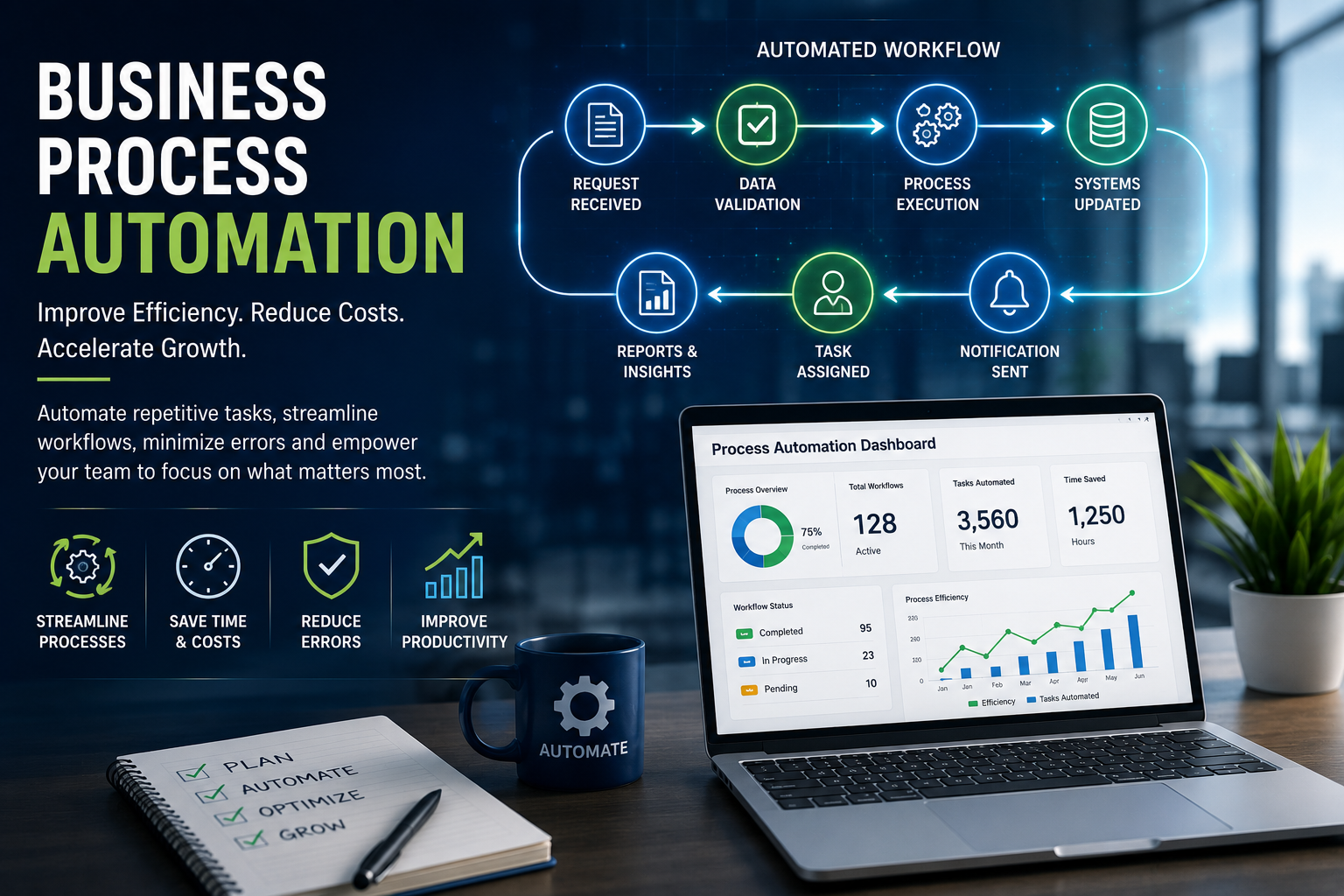
4. Business Process Automation
Organizations often operate workflows across CRM, ERP, email, databases and internal applications.
AI agents can become an intelligent layer connecting these systems and coordinating actions across multiple tools.
5. Software Development
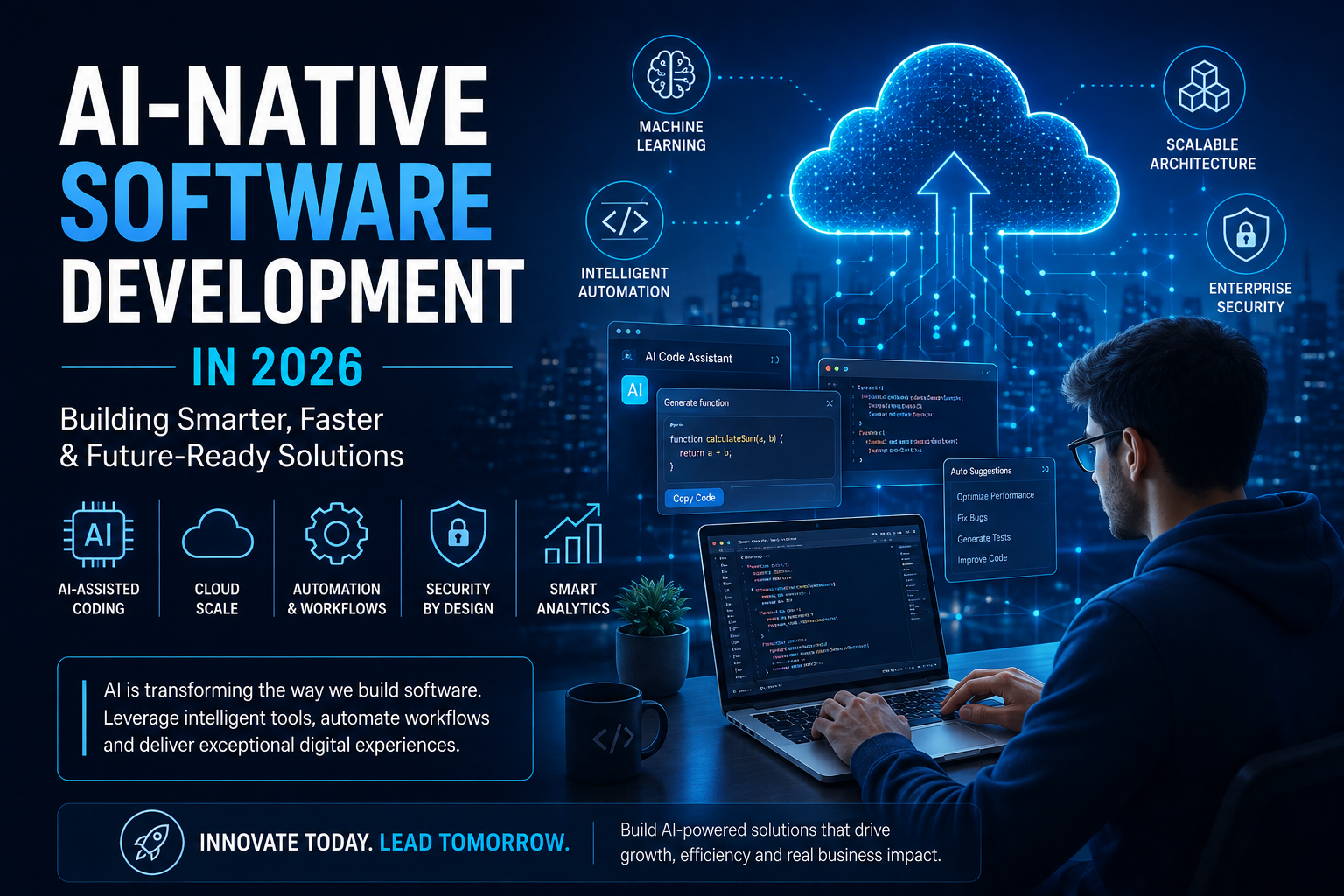
AI-native development is becoming an important technology trend. Gartner lists AI-Native Development Platforms among its strategic technology trends for 2026.
Developers can use AI throughout the development lifecycle, including:
- Code generation
- Testing
- Debugging
- Documentation
- Code analysis
- Deployment assistance
The Importance of AI Governance
Agentic AI also introduces new risks.
An AI system that can access business applications has more responsibility than a basic chatbot. Organizations need to carefully manage:
- Identity and permissions
- Data access
- Human approval
- Activity logging
- Model evaluation
- Security controls
- Auditability
- Data privacy
The more autonomy an AI system receives, the more important governance becomes.
Recent industry developments are also focusing on tracking and reporting security incidents involving AI agents, highlighting the need for stronger standards around autonomous AI systems.
How to Prepare Your Business for Agentic AI
Businesses considering agentic AI should avoid starting with technology alone.
A practical implementation strategy is:
Step 1: Identify repetitive workflows
Find processes involving repetitive decisions, data retrieval or manual coordination.
Step 2: Measure the current process
Document processing time, costs, error rates and employee involvement.
Step 3: Select the right AI use case
Start with a controlled workflow where AI can provide measurable benefits.
Step 4: Connect the required systems
Integrate the agent with relevant APIs, databases and business applications.
Step 5: Establish permissions
Give the AI only the access it actually requires.
Step 6: Maintain human oversight
High-impact actions should have appropriate approval mechanisms.
Step 7: Measure results
Track productivity, accuracy, response time, cost savings and customer experience.
The Future of Business Automation
Agentic AI is likely to become an important component of enterprise software as businesses move from isolated AI tools toward connected intelligent workflows.
The opportunity is not simply to “add AI” to an existing application.
The bigger opportunity is to redesign business processes around intelligent, secure and measurable automation.
For organizations, the competitive advantage will come from combining AI capabilities with reliable data, strong software architecture, security and human expertise.
Conclusion
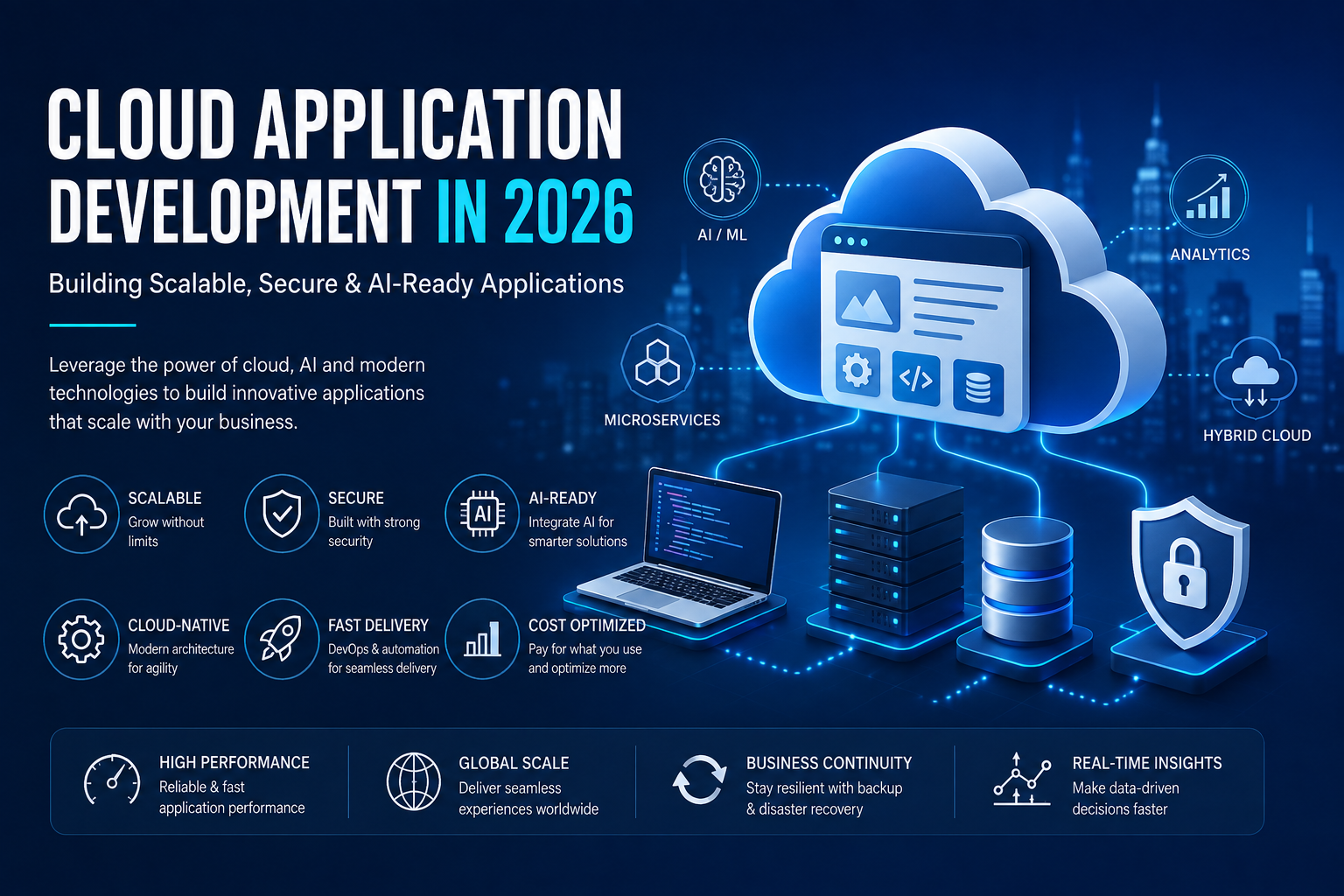
Agentic AI is changing the way organizations think about automation. The next generation of business software will increasingly combine AI agents, APIs, cloud infrastructure, enterprise data and workflow automation.
Businesses that approach this transition strategically can use agentic AI to improve productivity, accelerate operations and deliver more responsive digital experiences.
Riotech helps businesses explore modern software, AI and automation solutions designed around real operational requirements. Contact our team to discuss how intelligent automation can support your business.