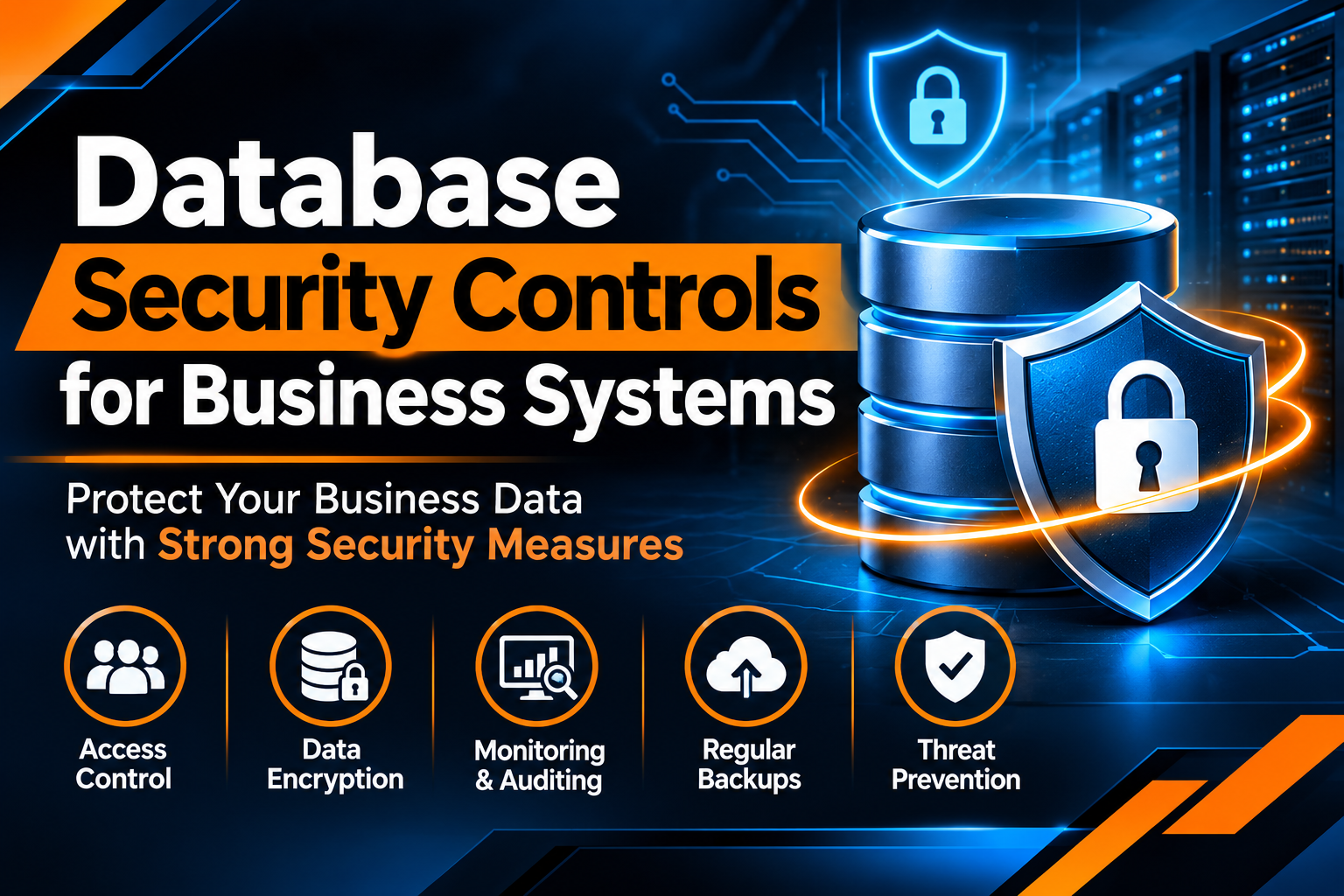
: Database Security Controls for Business Systems
Introduction
In today's digital business environment, databases play an important role in storing and managing valuable information. Businesses use databases to maintain customer records, financial details, employee information, transaction histories, and operational data. Protecting this information is essential to maintaining business continuity and preventing unauthorized access. Strong cybersecurity practices help organizations safeguard their databases against potential threats. Businesses looking to strengthen their overall security infrastructure can explore the solutions available at https://www.riotechsoftwares.com/cybersecurity.php.
Understanding Database Security Controls
Database security controls are the policies, technologies, and procedures used to protect stored information from unauthorized access, modification, theft, or loss. These controls help businesses maintain data confidentiality, integrity, and availability.
A well-structured database security strategy includes user authentication, access permissions, encryption, monitoring, and regular security assessments. Implementing these measures helps organizations reduce security risks and maintain reliable database operations.
1. User Authentication and Access Management
User authentication ensures that only authorized individuals can access business databases. Organizations should implement strong passwords, multi-factor authentication, and role-based access controls.
Access permissions should be assigned according to employees' responsibilities. For example, finance teams may require access to financial records, while other departments should only access information relevant to their work.
These access management practices strengthen business security and reduce the possibility of unauthorized database activities. For additional protection, organizations can review professional cybersecurity solutions at https://www.riotechsoftwares.com/cybersecurity.php.
2. Data Encryption and Information Protection
Data encryption converts sensitive information into an unreadable format that can only be accessed using the appropriate decryption key. It protects information both during transmission and while stored in database systems.
Businesses should use reliable encryption methods to protect customer information, financial records, login credentials, and confidential business documents.
Encryption also helps organizations reduce the impact of data exposure if unauthorized individuals gain access to database storage systems.
3. Regular Database Monitoring
Continuous database monitoring helps organizations identify unusual activities, suspicious login attempts, unauthorized changes, and potential security threats.
Monitoring systems can track database access, record user activities, and generate alerts when unusual behavior is detected.
Regular monitoring allows IT teams to investigate potential security incidents and take corrective action before they develop into serious problems. Businesses can strengthen these practices through dedicated cybersecurity support and solutions: https://www.riotechsoftwares.com/cybersecurity.php.
4. Regular Database Backups
Database backups are essential for protecting business information against accidental deletion, hardware failures, ransomware attacks, and system errors.
Organizations should establish automated backup schedules and maintain secure backup copies in separate storage environments. Regular restoration testing is also important to ensure that backed-up information can be recovered successfully.
A reliable backup strategy helps businesses minimize downtime and maintain operational continuity during unexpected incidents.
5. Database Security Updates and Vulnerability Management
Outdated database software may contain vulnerabilities that attackers can exploit. Regular software updates and security patches help address these weaknesses and improve system protection.
Businesses should periodically review database configurations, identify security gaps, and conduct vulnerability assessments.
Working with experienced cybersecurity professionals can help organizations identify risks and implement appropriate security measures. Visit https://www.riotechsoftwares.com/cybersecurity.php to explore cybersecurity services for business protection.
6. Employee Security Awareness
Employees play an important role in maintaining database security. Weak passwords, suspicious email attachments, and accidental information sharing can create security risks.
Organizations should provide regular security awareness training to help employees understand safe database usage, password management, phishing prevention, and responsible data handling.
Building a security-conscious workplace reduces human-related security incidents and supports stronger information protection.
Benefits of Strong Database Security Controls
Implementing effective database security controls offers several benefits:
Protects confidential business and customer information.
Reduces unauthorized database access.
Improves data accuracy and integrity.
Supports business continuity and recovery.
Helps identify potential security threats.
Builds customer confidence and trust.
Strengthens overall IT infrastructure.
Frequently Asked Questions (FAQs)
1. What are database security controls?
Database security controls are measures used to protect stored information against unauthorized access, modification, theft, and loss.
2. Why is database protection important for businesses?
Database protection helps businesses secure confidential information, maintain operational continuity, and reduce the risk of cyberattacks.
3. What is role-based database access control?
Role-based access control assigns database permissions according to an individual's job responsibilities and access requirements.
4. How does encryption protect business databases?
Encryption converts sensitive information into an unreadable format, preventing unauthorized individuals from understanding the data without the appropriate decryption key.
5. How frequently should businesses back up their databases?
Backup frequency depends on business requirements, database activity, and the importance of stored information. Critical databases may require daily or more frequent backups.
Conclusion
Database security controls are essential for protecting business information and maintaining reliable digital operations. By implementing authentication, access management, encryption, monitoring, regular backups, and security updates, organizations can reduce database-related risks.
Businesses should continuously evaluate their security practices and adopt suitable protection strategies to address evolving cyber threats. A proactive approach to database protection helps maintain information security, business continuity, and long-term customer trust.
Visit Website: https://www.riotechsoftwares.com/cybersecurity.php
Recent Posts

31 Oct 2026

30 Oct 2026
28 Oct 2026