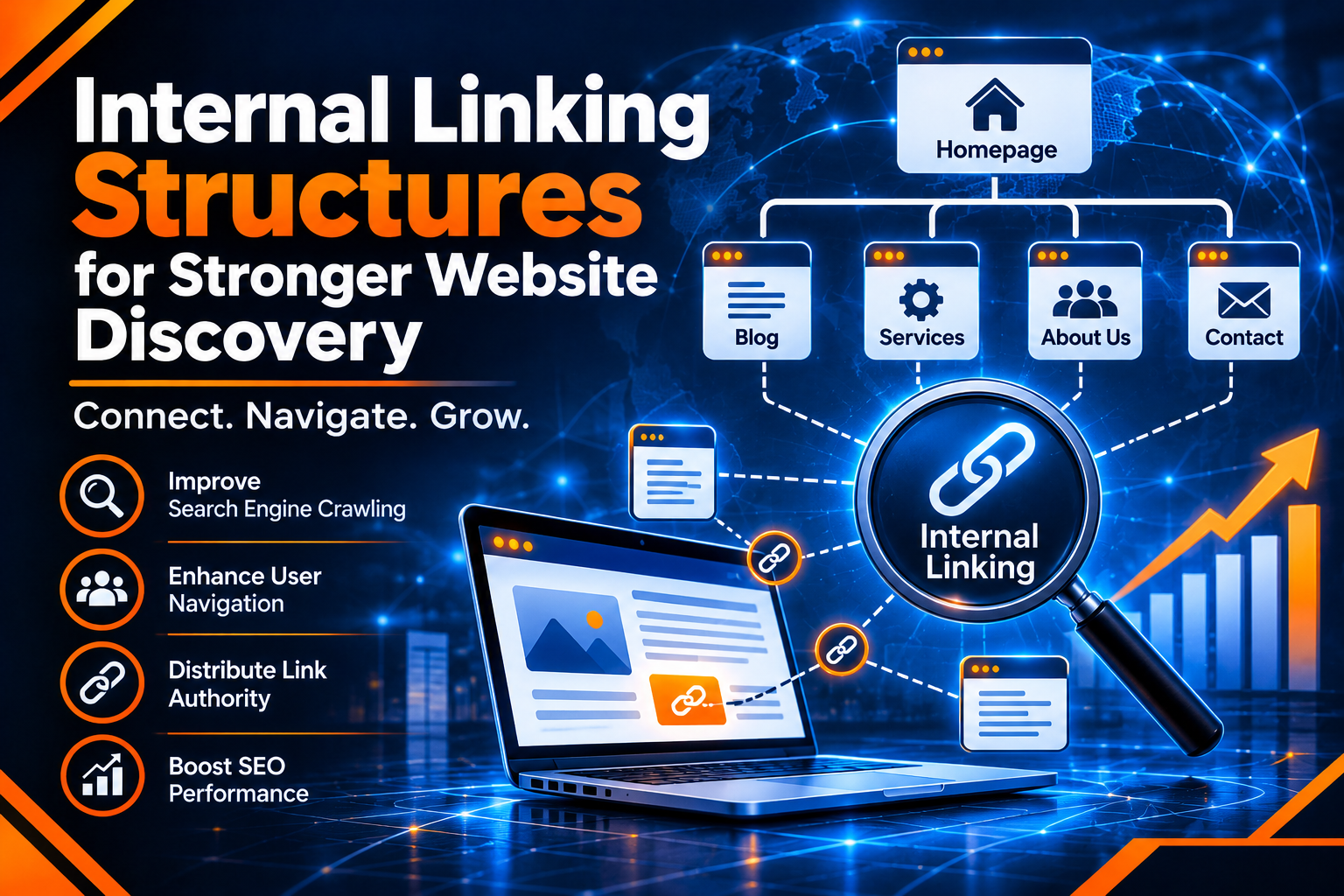
Internal Linking Structures for Stronger Website Discovery
Introduction
A well-structured website is essential for improving search engine visibility and providing a better user experience. When visitors land on a website, they should be able to navigate between relevant pages without difficulty. Similarly, search engines need clear pathways to discover, crawl, and understand website content. Internal linking plays an important role in achieving these objectives.
Internal linking refers to connecting one page of a website to another page within the same domain. A properly planned internal linking structure helps distribute link authority, establish relationships between related topics, and guide visitors towards useful information.
Businesses focusing on long-term online growth should understand how internal links support their overall digital marketing strategy. More information about professional digital marketing solutions is available at https://www.riotechsoftwares.com/digitalmarketing.php.
What Is Internal Linking?
Internal linking is the practice of adding hyperlinks between different pages of the same website. These links help users discover additional information and allow search engine crawlers to navigate website content more efficiently.
For example, a blog discussing SEO strategies can connect to another relevant article about keyword research or website optimization. This creates a logical relationship between different content sections.
Internal links generally serve three important purposes:
Help visitors navigate between related website pages.
Allow search engines to discover additional content.
Distribute link authority across important website pages.
A consistent internal linking strategy makes website navigation more organized and improves content accessibility.
Why Internal Linking Matters for Website Discovery
Search engines use automated crawlers to discover and understand website pages. Internal links provide pathways that help these crawlers move from one page to another.
Without proper internal linking, some pages may become difficult to discover, especially when they are not connected to important sections of the website.
Improved Search Engine Crawling
Internal links help search engine crawlers identify additional pages and understand how different sections of a website are connected. A logical structure can make important content easier to discover.
Better Content Relationships
Connecting related articles and service pages helps search engines understand the relationship between different topics. This creates a more organized content structure.
Improved Page Accessibility
Visitors can move between relevant pages without repeatedly returning to the homepage or using the website search function.
Better Distribution of Link Authority
Internal links can help distribute link equity throughout a website. Connecting important pages with relevant supporting content can strengthen the overall website structure.
Businesses can combine these practices with a broader digital marketing strategy through https://www.riotechsoftwares.com/digitalmarketing.php.
Types of Internal Links Used in Website Structures
Different internal linking methods support website navigation and content discovery.
Navigational Links
Navigational links appear in menus, headers, and other primary navigation sections. They help visitors access important website categories, services, and information pages.
Contextual Links
Contextual links are placed naturally within website content. They connect readers to related articles, resources, or service information that provides additional value.
Footer Links
Footer links provide access to important website sections, such as contact pages, company information, service categories, and policies.
Related Content Links
Related content links connect articles covering similar subjects. They encourage visitors to explore additional resources and spend more time discovering relevant website information.
Best Practices for Creating an Effective Internal Linking Structure
A successful internal linking strategy requires proper planning, relevant connections, and regular monitoring. Businesses should focus on creating links that genuinely help visitors and support website organization.
1. Create a Logical Website Hierarchy
Organize website content into clear categories and subcategories. Important pages should be accessible through a structured navigation system.
For example, a digital marketing website may organize its content into SEO, social media marketing, content marketing, and paid advertising sections.
2. Connect Relevant Pages
Always connect pages that share a meaningful topic or provide related information. Irrelevant links can confuse visitors and weaken the overall navigation experience.
3. Use Descriptive Anchor Text
Anchor text is the clickable text used for a hyperlink. It should clearly describe the destination page and provide useful context to readers.
Avoid using generic phrases repeatedly when a descriptive phrase can explain the linked content more effectively.
4. Prioritize Important Pages
Identify important service pages, landing pages, and high-value resources. Connect relevant supporting articles to these pages to improve their accessibility and help distribute internal link equity.
5. Avoid Orphan Pages
Orphan pages are website pages that do not receive internal links from other pages on the same website. They can be difficult for users and search engines to discover.
Regularly review website content to ensure that important pages have relevant internal links.
6. Monitor Broken Internal Links
Broken links create navigation problems and can negatively affect the user experience. Use website auditing tools to identify and fix incorrect or outdated internal URLs.
How Internal Linking Supports Digital Marketing Performance
Internal linking is an important part of website optimization and broader digital marketing activities. It supports content discovery, improves navigation, and helps visitors explore relevant business information.
When blog articles connect to appropriate service pages, businesses can guide readers towards additional resources and relevant offerings. Similarly, connecting related articles helps build topical relationships across the website.
Internal linking should work alongside other SEO activities, including keyword research, quality content creation, technical SEO, and website performance optimization.
Businesses interested in improving their online visibility can explore https://www.riotechsoftwares.com/digitalmarketing.php for information about digital marketing solutions.
Tools for Monitoring Internal Linking Performance
Website auditing and SEO tools can help identify opportunities to improve internal linking structures.
Some commonly used tools include:
Google Search Console: Helps monitor indexing information and identify website discovery issues.
Screaming Frog SEO Spider: Helps identify broken internal links, redirect chains, and orphan page opportunities when configured appropriately.
Ahrefs: Provides internal link reports and helps analyze website linking structures.
Semrush: Offers site auditing features for identifying internal linking and technical SEO issues.
Regular monitoring helps businesses maintain a consistent linking structure as their websites grow.
Frequently Asked Questions (FAQs)
1. What is internal linking in SEO?
Internal linking is the process of connecting different pages within the same website. It helps users navigate content and allows search engines to discover related pages.
2. How do internal links improve website discovery?
Internal links provide pathways for search engine crawlers to find additional website pages. They also help visitors discover relevant information through connected content.
3. How many internal links should a blog contain?
There is no fixed number of internal links required for every blog. The number should depend on content length, relevance, and the availability of useful related pages.
4. What are orphan pages in SEO?
Orphan pages are website pages that do not receive internal links from other pages on the same website. They may be harder for search engines and visitors to discover.
5. What is the difference between internal and external linking?
Internal links connect pages within the same domain, whereas external links direct users to pages on different websites.
6. Can internal linking improve website rankings?
Internal linking can support SEO by helping search engines discover content, understand page relationships, and distribute link equity. However, rankings also depend on several other SEO factors.
7. Which tools can help analyze internal links?
Google Search Console, Screaming Frog, Ahrefs, and Semrush offer features that can help analyze website structure and identify internal linking opportunities.
Conclusion
A strong internal linking structure helps create a well-organized website where visitors and search engines can discover relevant information more easily. By connecting related content, maintaining logical navigation, fixing broken links, and prioritizing important pages, businesses can improve website accessibility and support their SEO efforts.
Internal linking should be treated as an ongoing website optimization activity rather than a one-time task. Regular audits and thoughtful content connections can contribute to better website discovery, stronger content relationships, and sustainable digital marketing performance.
Visit Website
To explore professional digital marketing and website growth solutions, visit https://www.riotechsoftwares.com/digitalmarketing.php.
Recent Posts
03 Nov 2026

31 Oct 2026
30 Oct 2026