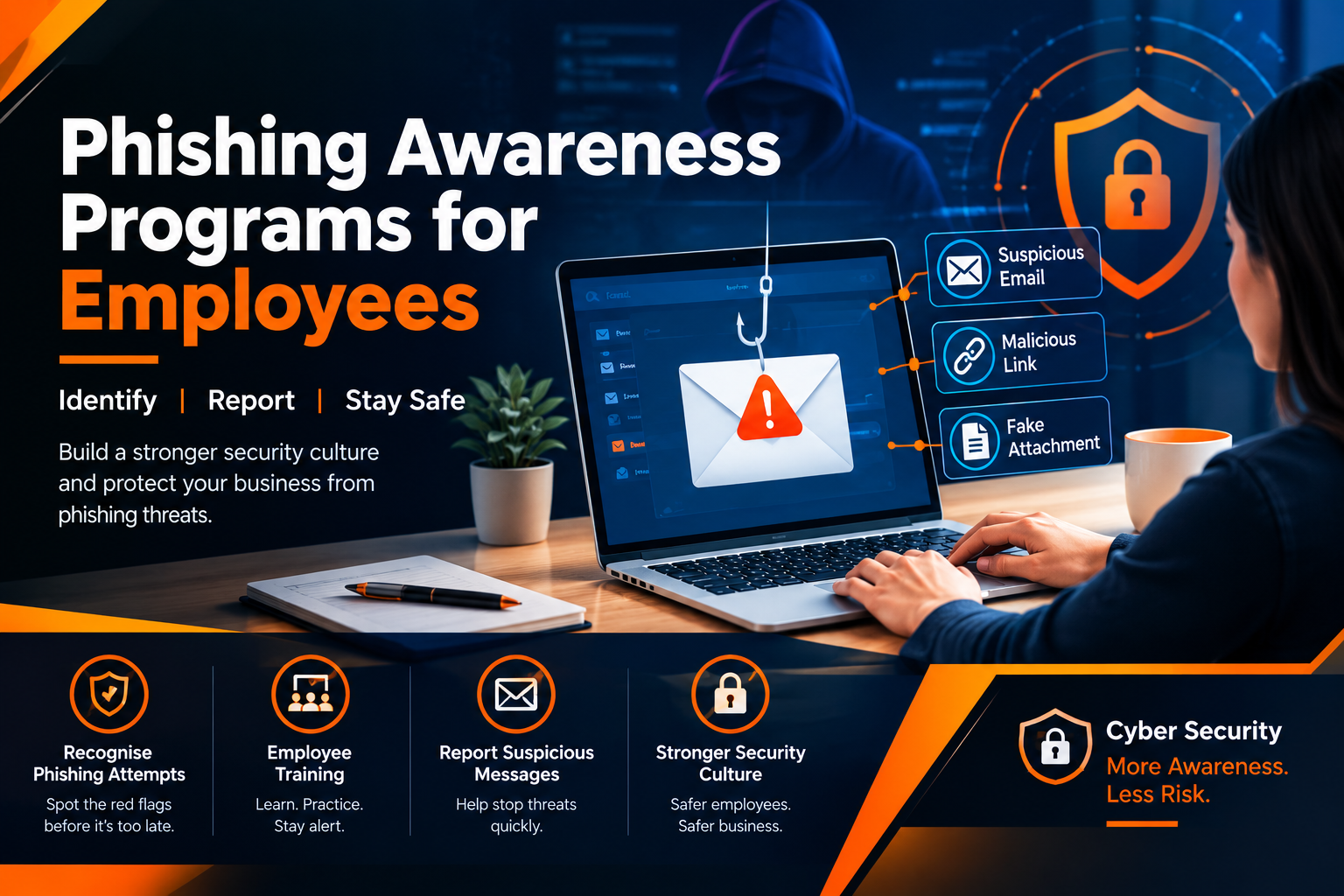
Phishing Awareness Programs for Employees
Introduction
Phishing attacks are one of the common cybersecurity threats faced by businesses today. Cybercriminals use fake emails, fraudulent websites, and misleading messages to trick employees into sharing sensitive information or downloading harmful files. Even a single mistake can expose company data and disrupt business operations.
Phishing awareness programs help employees recognise suspicious activities and respond safely to potential threats. By providing regular training and practical examples, organisations can build a stronger security culture and reduce the risk of cyberattacks.
Businesses can also explore https://www.riotechsoftwares.com/cybersecurity.php to learn more about cybersecurity solutions.
1. Understand Common Phishing Techniques
Employees should understand how phishing attacks work and the different forms they can take. Attackers may impersonate managers, customers, banks, or trusted service providers to make fraudulent communications appear genuine.
Common phishing techniques include:
Email phishing using fake messages and links
Spear phishing targeting specific employees
Smishing through fraudulent SMS messages
Vishing through deceptive phone calls
Fake login pages designed to steal credentials
Malicious attachments containing harmful software
Understanding these techniques helps employees identify warning signs before interacting with suspicious communications.
2. Teach Employees to Identify Suspicious Emails
A phishing email may look professional and appear to come from a legitimate organisation. However, small details can reveal that something is wrong.
Employees should check the sender's email address, examine links before opening them, and be cautious of unexpected attachments. Messages that create urgency, request confidential information, or promise unexpected rewards should receive additional scrutiny.
When an email seems unusual, employees should verify the request through a separate, trusted communication channel rather than replying directly.
3. Conduct Regular Phishing Simulation Exercises
Practical exercises allow employees to apply their knowledge in realistic situations. Organisations can send authorised simulated phishing emails to assess how employees respond to suspicious messages.
These exercises should focus on learning rather than punishment. When an employee interacts with a simulated phishing message, the organisation can provide immediate guidance explaining the warning signs that were missed.
Regular simulations help security teams identify knowledge gaps and improve future awareness training.
4. Establish Clear Reporting Procedures
Employees should know exactly how to report a suspected phishing attempt. A simple reporting process helps security teams investigate suspicious messages before other employees become targets.
Organisations can establish a dedicated reporting email address, an approved reporting button, or a central IT support channel. Employees should also understand that reporting a suspicious message is encouraged, even if they are unsure whether it is malicious.
Quick reporting can help prevent the spread of phishing attacks and support a faster security response.
5. Explain Password and Account Security
Phishing attacks often aim to steal usernames, passwords, and other authentication details. Employees should never share passwords through email or enter credentials on unfamiliar websites.
Organisations should encourage the use of strong, unique passwords and approved password managers. Multi-factor authentication (MFA) adds another layer of protection by requiring an additional verification step when signing in.
For more guidance on protecting business systems, visit https://www.riotechsoftwares.com/cybersecurity.php.
6. Provide Role-Based Security Awareness Training
Different employees face different phishing risks depending on their responsibilities. Finance teams may receive fraudulent payment requests, while HR departments may encounter fake recruitment documents or employee information requests.
Training should reflect these differences and use examples that employees are likely to encounter in their daily work. New employees should receive security awareness training during onboarding, while existing staff should participate in periodic refresher sessions.
Role-based training makes awareness programs more relevant and easier to apply in real situations.
7. Measure Training Effectiveness
Organisations should evaluate whether their phishing awareness programs are improving employee behaviour. Tracking a few useful metrics can help security teams understand which areas need more attention.
Important measures include:
Percentage of employees completing training
Number of suspicious emails reported
Rate of employees interacting with simulated phishing messages
Time taken to report suspicious communications
Results of follow-up awareness assessments
These results should be used to improve training materials and identify employees who may benefit from additional guidance.
8. Build a Strong Security Awareness Culture
Cybersecurity awareness should be an ongoing part of workplace practices rather than a one-time training activity. Short reminders, internal security updates, team discussions, and practical examples can help employees stay alert to changing threats.
Management should support responsible reporting and make it easy for employees to ask questions about suspicious messages. When employees feel comfortable reporting mistakes quickly, security teams have a better opportunity to limit potential damage.
Organisations can strengthen their overall security approach by exploring https://www.riotechsoftwares.com/cybersecurity.php.
Frequently Asked Questions
1. What is a phishing awareness program?
A phishing awareness program educates employees about fraudulent emails, messages, websites, and other techniques used by cybercriminals to steal information or gain unauthorised access.
2. How often should employees receive phishing awareness training?
Training should be provided during onboarding and refreshed regularly. Short awareness sessions and authorised phishing simulations throughout the year can reinforce important lessons.
3. What should an employee do after receiving a suspicious email?
The employee should avoid clicking links, opening unexpected attachments, or sharing sensitive information. They should report the message through the organisation's approved security reporting process.
4. Why are phishing simulations useful?
Phishing simulations help employees practise identifying suspicious communications and allow organisations to identify areas where additional training may be needed.
5. Can phishing awareness training prevent every cyberattack?
No. Training reduces human-related risks but cannot prevent every attack. It should be combined with technical safeguards such as email filtering, multi-factor authentication, endpoint protection, and regular security updates.
Conclusion
Phishing awareness programs help employees recognise suspicious communications, protect sensitive information, and report potential threats promptly. Regular training, practical simulations, clear reporting procedures, and measurable objectives can improve security awareness across an organisation.
By making cybersecurity education an ongoing priority, businesses can reduce phishing-related risks and support a more resilient working environment. For additional information about cybersecurity services, visit https://www.riotechsoftwares.com/cybersecurity.php.
Need Cybersecurity Support?
Need to strengthen your organisation's security awareness and reduce phishing-related risks? Combine employee education with appropriate technical safeguards and clear incident reporting procedures to improve your overall security posture.
Visit Website
Explore cybersecurity solutions at https://www.riotechsoftwares.com/cybersecurity.php
Recent Posts

27 Oct 2026
26 Oct 2026

23 Oct 2026