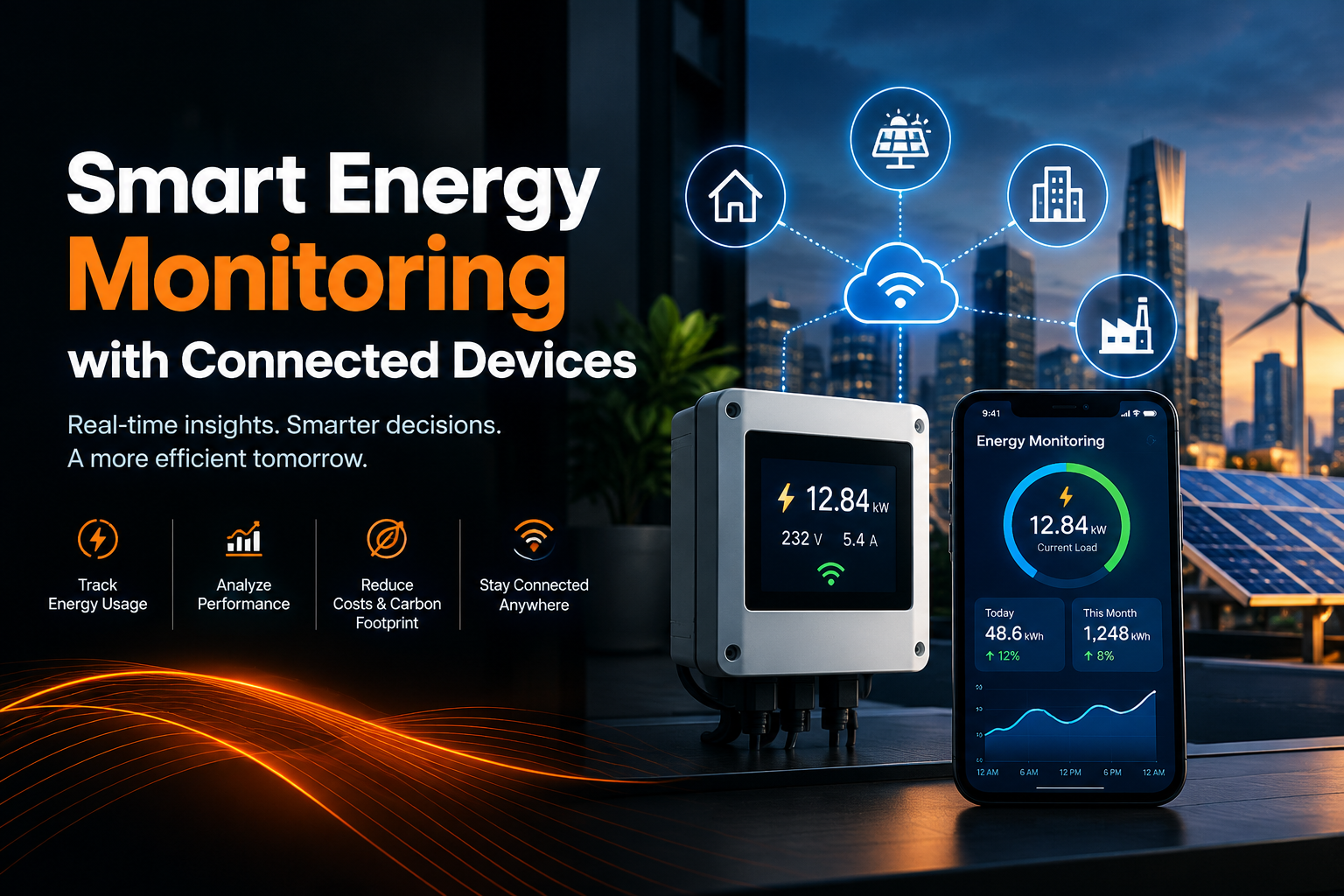
Smart Energy Monitoring with Connected Devices
Introduction
Energy monitoring has become an important part of modern business operations. Industries, commercial buildings, and manufacturing facilities need efficient ways to track electricity consumption, reduce energy waste, and control operational costs. Smart energy monitoring with connected devices uses Internet of Things (IoT) technology to provide real-time insights into energy usage.
By combining smart meters, connected sensors, embedded devices, and monitoring platforms, businesses can understand their energy consumption patterns and make informed decisions. To explore related technology solutions, visit https://www.riotechsoftwares.com/iotdevelopment.php.
What Is Smart Energy Monitoring?
Smart energy monitoring is a technology-based process that measures and analyzes energy consumption using connected devices. Unlike traditional manual monitoring, IoT-enabled systems automatically collect and transmit data for analysis.
These systems help organizations monitor electricity usage, identify unusual consumption, and understand when equipment consumes the most energy. The collected information supports better planning and energy management.
How Connected Devices Support Energy Monitoring
1. Real-Time Energy Tracking
Smart meters and IoT sensors continuously measure electricity consumption and send information to monitoring dashboards. Businesses can observe energy usage in real time and identify sudden increases in consumption.
2. Automated Data Collection
Connected devices reduce the need for manual readings and repetitive reporting. Automated collection helps maintain consistent energy records and makes it easier to compare consumption across different departments or facilities.
3. Energy Usage Analysis
Monitoring platforms analyze energy data to identify peak usage periods, inefficient equipment, and recurring consumption patterns. These insights help organizations determine where improvements may be needed.
4. Remote Monitoring
IoT connectivity enables authorized users to access energy information remotely. Facility managers can review consumption reports and monitor connected equipment without being physically present at the site.
5. Alerts and Anomaly Detection
Smart monitoring systems can generate alerts when energy consumption exceeds predefined limits or unusual patterns appear. These alerts help maintenance teams investigate potential problems and take appropriate action.
Businesses interested in developing connected monitoring solutions can visit https://www.riotechsoftwares.com/iotdevelopment.php to learn more about IoT development possibilities.
Key Benefits of Smart Energy Monitoring
Smart energy monitoring provides several operational advantages:
Improved visibility into energy consumption.
Identification of unnecessary energy usage.
Better equipment performance monitoring.
Support for cost-control strategies.
More informed energy management decisions.
Improved reporting for sustainability initiatives.
Actual savings depend on the equipment being monitored, the quality of collected data, and the corrective actions taken by the organization.
Applications Across Different Industries
Manufacturing Facilities
Manufacturers can monitor machinery, production equipment, and electrical systems to identify energy-intensive operations and improve efficiency.
Commercial Buildings
Offices, shopping centers, and business facilities can track lighting, heating, ventilation, and air-conditioning consumption to support better building management.
Healthcare Facilities
Hospitals and healthcare centers can monitor energy consumption across equipment and building systems while maintaining the reliability required for essential operations.
Smart Homes
Connected energy meters and smart devices help homeowners understand electricity usage and manage compatible appliances more efficiently.
Industrial Infrastructure
Factories and industrial sites can combine energy monitoring with equipment data to identify abnormal consumption and support maintenance planning.
Challenges to Consider
Although connected energy monitoring offers significant benefits, organizations must consider installation costs, device compatibility, network reliability, and data security. Connected devices should use appropriate authentication, encrypted communication, controlled access, and regular firmware updates.
Selecting suitable sensors and establishing clear monitoring objectives can help organizations implement a practical and scalable solution.
For businesses planning connected technology projects, visit https://www.riotechsoftwares.com/iotdevelopment.php to explore IoT development services and potential applications.
Conclusion
Smart energy monitoring with connected devices enables businesses to understand energy consumption, identify inefficiencies, and improve operational decision-making. Through IoT sensors, smart meters, data analytics, and remote monitoring, organizations can develop more efficient energy management practices.
Learn more about connected technology solutions through Riotech Softwares' IoT Development services: https://www.riotechsoftwares.com/iotdevelopment.php
Recent Posts
15 Oct 2026
10 Oct 2026