Legacy Software Modernization Strategies: A Complete Guide for Businesses
Introduction
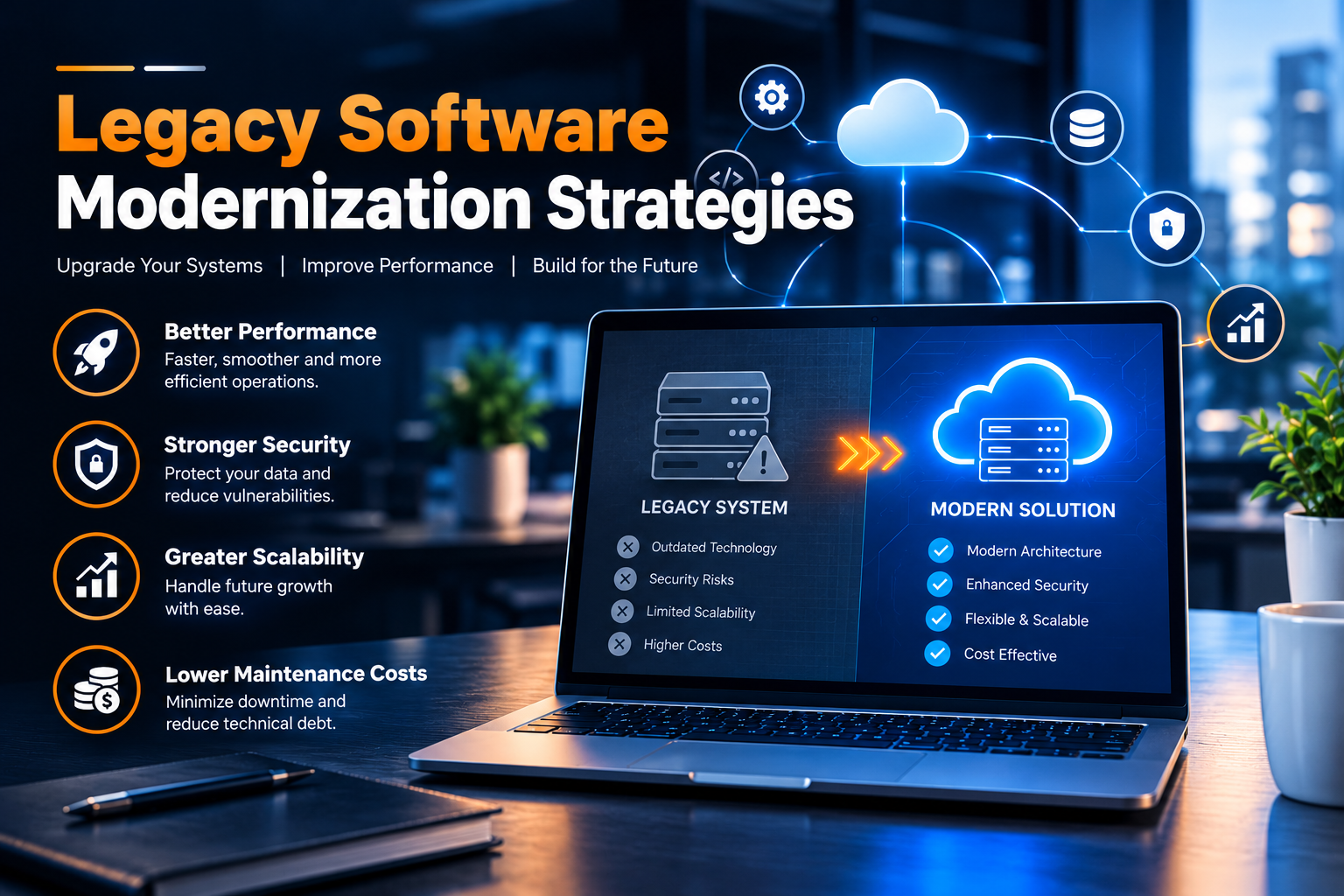
Legacy software modernization is the process of upgrading outdated software systems to improve performance, security, scalability, and compatibility with modern technologies. Many businesses continue to rely on legacy applications that support important daily operations. However, these systems can become difficult to maintain, expensive to operate, and less effective as business requirements evolve.
By adopting the right legacy software modernization strategies, organizations can improve operational efficiency, reduce technical limitations, and prepare their software infrastructure for future growth.
What Is Legacy Software Modernization?
Legacy software modernization involves updating existing applications, databases, architectures, and technologies without unnecessarily disrupting business operations. Instead of replacing every system completely, businesses can choose an approach that aligns with their budget, technical requirements, and long-term objectives.
Professional https://www.riotechsoftwares.com/softwaredevelopment.php services can help businesses evaluate outdated systems, identify technical challenges, and develop suitable modernization solutions.
Why Do Businesses Need Legacy Software Modernization?
1. Improved System Performance
Older software may experience slow processing, limited functionality, and performance issues when handling increasing workloads. Modernization helps optimize application architecture, improve response times, and support smoother business operations.
2. Enhanced Security
Legacy applications may depend on outdated frameworks, unsupported technologies, or older security protocols. Updating these systems helps address vulnerabilities, strengthen access controls, and improve data protection.
3. Better Scalability
As businesses expand, their software must accommodate more users, transactions, and data. Modernized applications can provide greater flexibility and make it easier to scale resources according to changing requirements.
4. Reduced Maintenance Costs
Maintaining outdated software can require specialized technical knowledge and time-consuming troubleshooting. Modernization can simplify maintenance, reduce recurring technical problems, and improve development productivity.
Key Legacy Software Modernization Strategies
1. Rehosting
Rehosting involves moving an existing application to a new infrastructure environment, such as a cloud platform, with minimal changes to its underlying code. This strategy is suitable for businesses seeking infrastructure improvements without extensive application redevelopment.
2. Refactoring
Refactoring improves the internal structure of existing software without changing its core functionality. Developers can simplify complex code, remove inefficiencies, and improve maintainability while preserving essential business processes.
3. Replatforming
Replatforming moves applications to a modern platform with selected modifications. This approach helps businesses take advantage of improved infrastructure, database technologies, or managed services without rebuilding the entire application.
4. Rebuilding Applications
When legacy software has significant architectural limitations, rebuilding may be the most effective option. This strategy involves developing a new application using modern technologies while retaining the essential business requirements of the original system.
5. Replacing Legacy Systems
Some applications may no longer meet business needs or justify the cost of modernization. In such cases, replacing the existing solution with a suitable modern application can improve functionality and simplify long-term support.
6. Integrating APIs
Application programming interfaces (APIs) allow legacy systems to communicate with modern applications and services. API integration can extend the usefulness of existing software, connect business workflows, and support gradual modernization.
Best Practices for Successful Modernization
Businesses should begin by assessing their existing software environment, including application dependencies, infrastructure, security risks, and maintenance requirements. This assessment helps establish priorities and determine which modernization strategy offers the greatest value.
A phased implementation approach can reduce disruption by updating critical components gradually. Organizations should also establish data backup procedures, test applications thoroughly, and maintain monitoring systems throughout the modernization process.
Choosing suitable technologies is equally important. Modern software architecture should support future integration, scalability, security, and maintainability. Working with an experienced software development team can help businesses make informed technical decisions and manage implementation risks.
Explore https://www.riotechsoftwares.com/softwaredevelopment.php to learn more about software development solutions that can support evolving business requirements.
Common Challenges in Legacy Modernization
Legacy modernization can involve several challenges, including compatibility issues, data migration risks, limited documentation, budget constraints, and resistance to operational changes.
Businesses can address these challenges by documenting system dependencies, setting realistic project milestones, involving stakeholders early, and conducting comprehensive testing before deployment. A clearly defined modernization roadmap helps balance immediate improvements with long-term business goals.
Conclusion
Legacy software modernization enables businesses to improve system performance, strengthen security, reduce maintenance complexity, and adapt to changing market demands. Whether an organization chooses rehosting, refactoring, replatforming, rebuilding, or replacement, the right strategy depends on its existing infrastructure and future objectives.
By planning modernization carefully and adopting appropriate software development practices, businesses can transform outdated systems into more reliable and flexible digital solutions.
For professional software development support, visit:
https://www.riotechsoftwares.com/softwaredevelopment.php
Recent Posts

10 Oct 2026