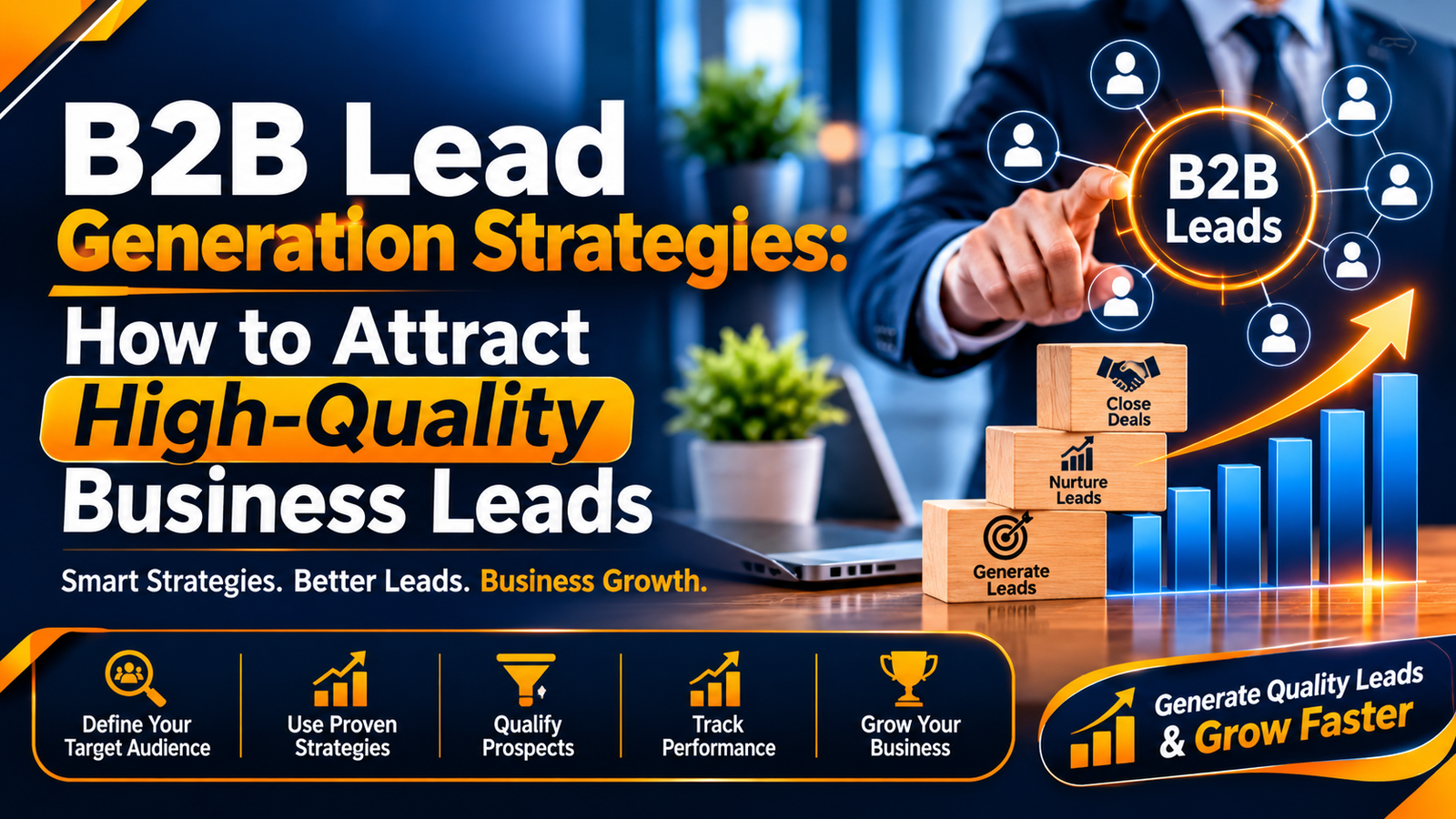
B2B Lead Generation Strategies: How to Attract High-Quality Business Leads
Introduction
Finding new customers is important for every business. But getting more leads does not always mean getting more sales. Companies need potential customers who have a real need, a suitable budget, and an interest in their services.
B2B lead generation is the process of finding and attracting other businesses that may buy your products or services. It uses methods such as SEO, content marketing, LinkedIn, email campaigns, and paid advertising. The goal is to turn business interest into real sales opportunities.
Businesses can improve their online visibility and attract potential customers through effective digital strategies. Companies looking for professional support can explore Riotech Softwares' Digital Marketing Services and Web Solutions.
This guide covers 10 practical ways to attract better leads. It also explains how to qualify prospects, track results, and improve your sales process.
What Is B2B Lead Generation?
B2B lead generation means finding businesses that may need what your company offers.
For example, a software company may look for businesses that need a website, mobile app, or CRM system.
A business becomes a potential lead when someone from that company takes an action, such as:
- Filling out a contact form
- Asking for a price quote
- Booking a meeting
- Requesting a product demo
- Downloading a business guide
- Contacting your team on LinkedIn
However, not every lead is ready to buy. Some are only looking for information. Others may have an urgent need.
That is why businesses must focus on lead quality as well as lead volume.
Why Is B2B Lead Generation Important?
A clear lead generation plan helps companies find new buyers and grow their sales pipeline.
Here are five key benefits.
1. Finds New Business Opportunities
Lead generation helps companies reach businesses that may need their services. As a result, sales teams have more chances to start useful conversations.
2. Reaches the Right People
Businesses can target prospects by industry, company size, location, and job role. This makes marketing more focused and reduces contact with unsuitable buyers.
3. Supports Sales Growth
Good leads give sales teams more chances to discuss customer needs, explain solutions, and close deals.
4. Improves Marketing Decisions
Lead data shows which campaigns attract interest. Teams can use this information to improve their content, ads, and website.
5. Builds Long-Term Relationships
Some buyers need time before making a decision. Regular follow-ups help your company stay in touch and build trust.
10 Effective B2B Lead Generation Strategies
There is no single method that works for every company. The best approach depends on your audience, services, budget, and sales goals.
Use the following strategies to build a steady flow of relevant prospects.
1. Define Your Ideal Customer Profile
An Ideal Customer Profile (ICP) describes the type of company most likely to need your product or service.
Before spending money on marketing, decide which businesses you want to reach.
Look at these factors:
- Industry: Which sectors need your solution?
- Company size: Do you serve startups, small firms, or large companies?
- Location: Which cities or countries do you cover?
- Budget: Can your target companies afford your service?
- Business needs: What problems can you solve?
- Decision-makers: Who chooses the service provider?
Example: A CRM development company may target growing businesses that manage customer details through spreadsheets. These companies may need a better way to track sales and customer activity.
A clear ICP saves time. It also helps your marketing team create messages that match buyer needs.
2. Use SEO to Attract Potential Buyers
Search engine optimization (SEO) helps your website appear when people search for your services.
For example, a business owner looking for a custom software company may find your website through Google.
To attract relevant visitors:
- Find keywords your buyers use.
- Create clear service pages.
- Write helpful blog posts.
- Improve website speed.
- Make your site mobile-friendly.
- Add simple contact forms.
- Link related pages on your website.
Use search terms that show a clear need. Examples include "CRM development services" and "custom mobile app development company."
These searches can bring visitors who are already looking for a solution.
However, ranking in search results is only one part of the process. Your page must also explain your service and give visitors a clear next step.
3. Publish Helpful Content
Content marketing helps businesses attract buyers by answering their questions.
Useful content also shows that your company understands the problems faced by its audience.
You can publish:
- How-to guides
- Industry articles
- Case studies
- Whitepapers
- Research reports
- Product comparisons
- Educational videos
Example: A company that offers CRM services can publish an article about managing customer records. Readers facing this problem may then explore its CRM solutions.
Keep each article focused on one topic. Explain the problem, offer useful advice, and link to a related service page.
Most importantly, avoid writing content only to add keywords. Write to help the reader make a better decision.
4. Find Business Prospects on LinkedIn
LinkedIn helps companies connect with professionals, business owners, and decision-makers.
It can support lead generation through networking, useful posts, and direct communication.
Follow these steps:
- Complete your company profile.
- Find people in your target industries.
- Connect with relevant professionals.
- Share useful business tips.
- Join industry discussions.
- Send personal connection messages.
- Follow up with interested people.
- For better results, make each message relevant to the person receiving it.
For example, a message to a sales manager should focus on sales problems. A message to an IT manager may focus on technical needs.
Avoid sending the same sales pitch to hundreds of people. Build a real connection first.
5. Create Landing Pages That Get Responses
A landing page is a web page built around one main action. It may ask visitors to book a call, request a quote, or view a product demo.
A good landing page should include:
- A clear headline
- A short service description
- Main customer benefits
- Trust signals, where available
- A simple contact form
- A clear call to action
Keep the form short. Ask only for details your team needs to respond.
For example, a software company can create a page for its CRM development service. The page can explain the main features and include a "Request a Consultation" form.
Also, make sure the page matches the ad or link that brought the visitor there. This creates a smoother experience.
6. Use Email to Build Buyer Relationships
Email marketing helps companies stay in touch with people who have shown interest.
Some prospects are not ready to buy today. They may need more details before making a decision. Useful emails can help them understand their options.
A simple email sequence can include:
- Welcome email: Introduce your company.
- Helpful email: Share a useful guide.
- Solution email: Explain how your service solves a problem.
- Proof email: Share a relevant case study, if available.
- Follow-up email: Invite the reader to book a meeting.
Personalize messages based on the person's role, industry, or needs.
In addition, keep emails short and useful. Avoid sending repeated sales messages without offering value.
7. Run Targeted Advertising Campaigns
Paid ads can help businesses reach a chosen audience and attract new inquiries.
Common options include search ads and LinkedIn Ads. The right platform depends on where your buyers spend time and how they search for services.
To improve your campaigns:
- Choose a clear target audience.
- Select relevant search terms.
- Write simple ad messages.
- Send visitors to a matching landing page.
- Track form submissions.
- Review lead quality.
- Clicks and impressions show that people saw or interacted with an ad. They do not prove that the campaign generated good leads.
Therefore, measure how many inquiries become qualified prospects and paying customers.
8. Offer Free Consultations and Useful Resources
A useful free offer can encourage potential buyers to contact your company.
It should solve a small problem or help them understand what they need.
Examples include:
- Free website reviews
- Software consultations
- Business checklists
- Industry guides
- Product demos
- Technical assessments
Example: A company planning a new website may book a free consultation. During the call, the service provider can learn about the project, budget, and expected timeline.
This creates a useful first conversation. It also helps both sides decide whether the project is a good fit.
9. Manage Prospects With CRM Software
Customer Relationship Management (CRM) software helps companies store contact details and track conversations with prospects.
Without a proper system, teams may miss follow-ups or lose important information.
A CRM can help your team:
- Store contact details.
- Record calls and emails.
- Assign prospects to sales staff.
- Set follow-up reminders.
- Track sales stages.
- Review sales reports.
For example, a sales team can use CRM software to see which prospects need a call and which ones are waiting for a proposal.
This keeps the process organised and makes it easier for teams to work together.
10. Measure and Improve Campaign Results
A lead generation plan needs regular review. Tracking the right numbers helps you see what is working and what needs attention.
Here are four useful metrics.
- Cost Per Lead (CPL)
CPL shows how much money a campaign spends to get one lead.
Formula:
CPL = Total Lead Generation Cost ÷ Total Leads Generated
Example: A campaign costs ₹20,000 and brings 100 leads. The cost per lead is ₹200.
- Lead Conversion Rate
This shows the percentage of leads that complete a chosen action.
Formula:
Lead Conversion Rate = (Number of Conversions ÷ Total Leads) × 100
- Customer Acquisition Cost (CAC)
CAC shows the average cost of getting one new customer.
Formula:
CAC = Total Sales and Marketing Cost ÷ Number of New Customers
- Lead-to-Customer Rate
This shows how many leads become paying customers.
Formula:
Lead-to-Customer Rate = (New Customers ÷ Total Leads) × 100
Do not review these numbers in isolation. A low CPL may look good, but the leads may not match your target audience.
Instead, compare cost, lead quality, and sales results together.
How to Qualify B2B Leads
Getting an inquiry is only the beginning. Your team must decide whether the prospect is a good fit.
Lead qualification is the process of checking a prospect's needs, budget, decision-making role, and buying timeline.
One popular method is the BANT framework.
What Is the BANT Framework?
BANT stands for Budget, Authority, Need, and Timeline.
| Factor | Question to Ask |
| Budget | Does the company have money for the solution? |
| Authority | Is this person part of the buying decision? |
| Need | Does the company have a problem you can solve? |
| Timeline | When does it plan to start? |
Example: A company needs CRM software, has an approved budget, and wants to start within two months. This prospect may be ready for a sales discussion.
However, BANT should guide the conversation, not turn it into a strict checklist. Some buyers may have a clear need but still be working on budget approval.
What Are the Main Types of B2B Leads?
Companies often group prospects by their level of interest and readiness.
Marketing Qualified Lead (MQL): A person who has shown interest through marketing, such as downloading a guide or attending a webinar.
Sales Qualified Lead (SQL): A prospect reviewed by the sales team and considered ready for direct sales contact.
Product Qualified Lead (PQL): A prospect whose use of a product or free trial shows strong interest in buying.
These groups help marketing and sales teams decide how to follow up.
How Does the B2B Lead Generation Funnel Work?
A lead generation funnel shows the steps a buyer takes before making a purchase.
1. Awareness
The buyer first learns about your company through search, social media, ads, or content.
2. Interest
The buyer visits your website, reads an article, or explores your services.
3. Consideration
The buyer compares options, downloads a guide, or asks for more details.
4. Qualification
Your sales team checks the buyer's needs, budget, authority, and timeline.
5. Conversion
The buyer chooses your product or service and becomes a customer.
Each stage needs a suitable message. For example, a new visitor may need helpful information, while a qualified prospect may need a proposal.
By tracking movement through the funnel, companies can find where prospects lose interest and improve that stage.
Practical Example: How a Business Can Build a Lead Generation Process
Consider a software company that wants to attract businesses looking for CRM development.
The following is an illustrative workflow, not a report of measured client results.
- Choose a target audience: Focus on growing businesses that need better customer data management.
- Create useful content: Publish a guide about common CRM problems.
- Improve search visibility: Use relevant terms on the guide and service page.
- Add a clear offer: Invite readers to book a CRM consultation.
- Collect inquiries: Use a short form to gather basic project details.
- Review each prospect: Check the business need, budget, and timeline.
- Follow up: Contact suitable prospects and discuss the next steps.
- Measure results: Review inquiries, qualified leads, meetings, and new customers.
This process connects marketing activity with sales follow-up. It also helps the company understand which steps need improvement.
Common B2B Lead Generation Mistakes to Avoid
Even a good campaign can fail when the basic process is weak.
Avoid these common mistakes:
- Targeting everyone: A broad audience can bring unsuitable inquiries. Define your ideal customer first.
- Focusing only on lead volume: More leads do not always mean more sales.
- Sending generic messages: Match your communication to each prospect's needs.
- Delaying follow-ups: Respond to genuine inquiries in a timely way.
- Using unclear landing pages: Explain your offer and make the next step easy.
- Ignoring campaign data: Review performance before spending more money.
- Separating marketing and sales: Both teams should agree on what makes a lead qualified.
A simple, well-managed process is often more useful than running many campaigns without a clear plan.
How Riotech Softwares Can Support Your Digital Growth
A strong online presence can help businesses reach potential buyers and create new opportunities.
Riotech Softwares provides digital solutions that can support business growth through technology and online marketing.
Explore its Digital Marketing Services to learn more about its digital marketing solutions.
To discuss your business needs or a project, visit the Riotech Softwares Contact Page.
Frequently Asked Questions About B2B Lead Generation
1. What is B2B lead generation?
B2B lead generation is the process of finding businesses that may buy your products or services. It uses methods such as SEO, email marketing, LinkedIn, content, and paid ads.
2. What are the best B2B lead generation strategies?
Useful methods include defining an ideal customer profile, improving SEO, publishing helpful content, using LinkedIn, running targeted ads, and sending relevant emails.
3. How can I get high-quality B2B leads?
Start by choosing the right target companies. Then create useful content, offer relevant solutions, and check each prospect's needs before passing them to the sales team.
4. What is an Ideal Customer Profile?
An Ideal Customer Profile describes the type of company most likely to need your product or service. It may include industry, company size, location, budget, and business goals.
5. What is the difference between B2B and B2C lead generation?
B2B lead generation targets companies and often involves several decision-makers. B2C lead generation targets individual consumers and focuses on personal needs and buying choices.
6. How does SEO help generate B2B leads?
SEO helps your website appear for relevant search terms. It can attract visitors who are already looking for a product, service, or business solution.
7. What is lead nurturing?
Lead nurturing means building a relationship with potential buyers through useful emails, content, and follow-ups. It helps prospects learn more before they make a purchase.
8. What does BANT mean in sales?
BANT stands for Budget, Authority, Need, and Timeline. Sales teams use it to understand a prospect's buying ability, role, problem, and expected decision date.
9. Which metrics should I track?
Track Cost Per Lead, lead conversion rate, Customer Acquisition Cost, and lead-to-customer rate. Together, these numbers show the cost and quality of your campaigns.
10. How long does B2B lead generation take?
The time depends on the industry, service cost, buyer needs, and sales process. Some prospects decide quickly, while others need several meetings and follow-ups.
Conclusion
B2B lead generation helps businesses attract qualified prospects and create new sales opportunities. Strategies such as SEO, content marketing, LinkedIn, email campaigns, and targeted advertising can improve lead quality and support business growth.
Businesses looking to strengthen their online presence can explore Riotech Softwares' Digital Marketing Services and IT Consulting Services.
For business inquiries, contact Riotech Softwares.
Remember, successful lead generation is not about collecting more contacts but building meaningful relationships that turn potential buyers into customers.
Recent Posts



11 Nov 2026
10 Nov 2026