Employee Self-Service Portals for HR Teams
Introduction
Managing employee information, attendance, leave requests, payroll details, and internal communication can become challenging for growing organizations. Traditional HR processes often involve paperwork, repetitive administrative tasks, and delays in information sharing. These challenges can reduce productivity and make it difficult for HR teams to focus on important workforce management activities.
Employee Self-Service (ESS) portals provide a digital solution that allows employees to access and manage their HR-related information through a centralized platform. With customized software solutions, businesses can simplify HR operations, reduce manual work, and improve the overall employee experience.
For organizations looking to build customized business applications, visit https://www.riotechsoftwares.com/softwaredevelopment.php.
What Is an Employee Self-Service Portal?
An Employee Self-Service portal is a digital platform that enables employees to manage their personal and professional information without depending entirely on HR departments.
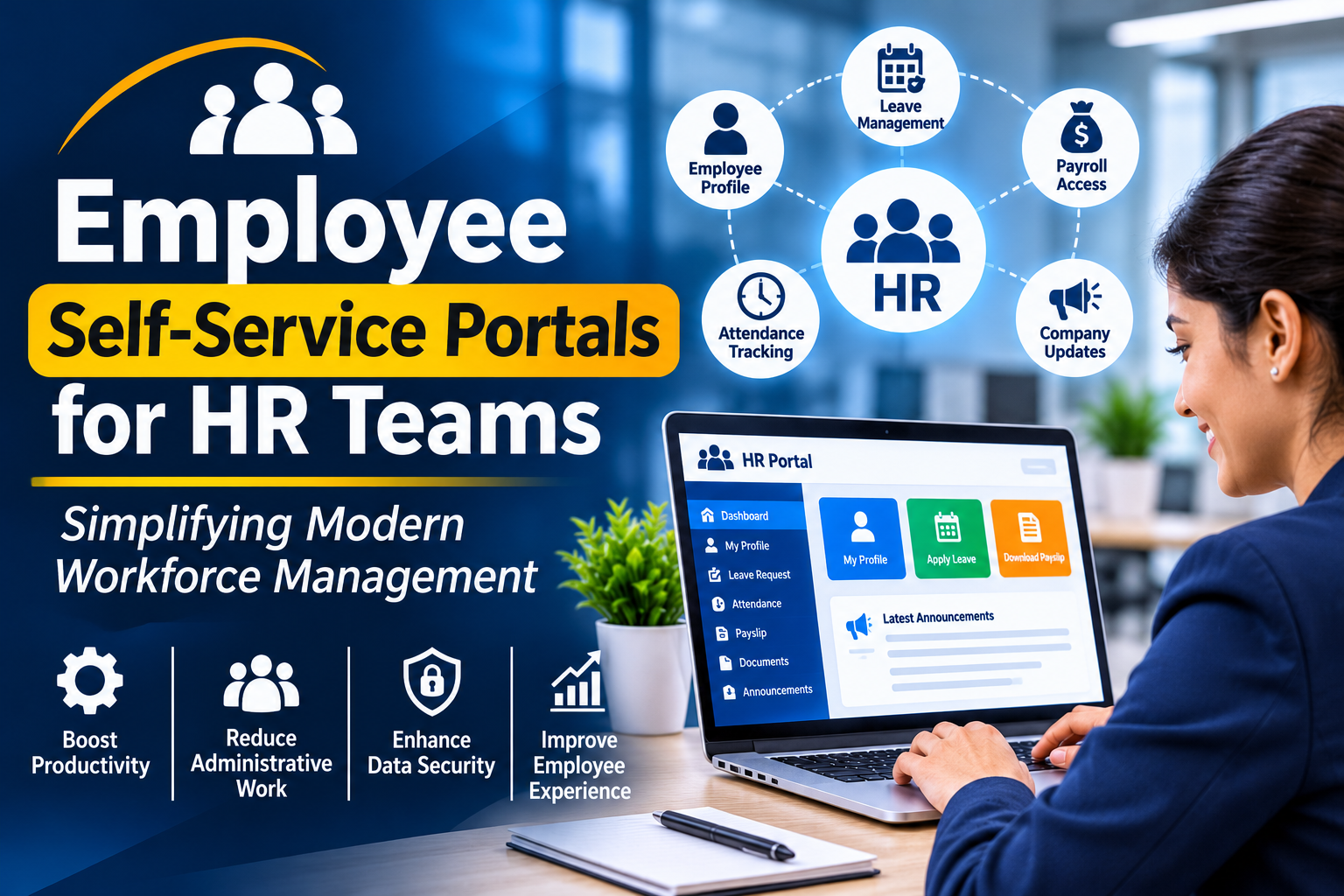
Employees can use these portals to update personal details, download salary slips, submit leave applications, check attendance records, and access important company announcements.
These platforms reduce manual communication and provide employees with convenient access to essential HR services. Businesses can also integrate ESS portals with existing HR management systems to maintain consistent employee records.
Why HR Teams Need Employee Self-Service Portals
HR departments handle several administrative responsibilities every day. Managing employee requests manually can consume valuable time and increase the possibility of errors.
Employee self-service portals help HR teams by:
Reducing repetitive administrative work.
Improving employee information management.
Simplifying leave and attendance tracking.
Providing faster access to payroll information.
Improving communication between employees and HR teams.
Reducing paperwork and manual data entry.
Organizations investing in modern software development can build portals that support their specific HR requirements and business workflows.
Explore software development services: https://www.riotechsoftwares.com/softwaredevelopment.php.
Essential Features of an Employee Self-Service Portal
A well-designed ESS portal should include features that make everyday HR activities simple and accessible.
1. Employee Profile Management
Employees should be able to view and update their personal information, contact details, emergency contacts, and other relevant records. This helps HR teams maintain accurate employee databases.
2. Leave Management
The portal should allow employees to submit leave requests, check available leave balances, and monitor approval status. HR managers can review requests and manage approvals through a centralized dashboard.
3. Attendance and Working Hours
Attendance tracking features help employees view their working hours, attendance records, and approved absences. This improves transparency and reduces unnecessary communication with HR departments.
4. Payroll and Salary Information
Employees can access salary slips, payment details, tax documents, and other payroll-related information through a secure portal.
5. Document Management
An ESS platform can provide access to employment contracts, company policies, HR forms, and other important documents. Employees can retrieve necessary information whenever required.
6. Internal Communication
Company announcements, policy updates, holiday notifications, and important HR messages can be shared through a centralized communication section.
How Employee Self-Service Portals Improve HR Productivity
Employee self-service portals help transform traditional HR operations into more organized digital workflows.
Instead of responding to every routine employee query, HR professionals can focus on recruitment, employee engagement, performance management, and workforce planning.
Automated workflows also help reduce delays in leave approvals, document requests, and employee information updates.
Through customized software development, businesses can integrate these features into a single platform that improves coordination between employees, managers, and HR departments.
Learn more about customized development solutions at https://www.riotechsoftwares.com/softwaredevelopment.php.
Security Considerations for HR Self-Service Portals
Employee portals contain sensitive information, including personal details, payroll records, employment documents, and attendance data. Therefore, security should be an important part of portal development.
Businesses should consider the following security measures:
Implement role-based access controls.
Use secure login authentication.
Encrypt sensitive employee information.
Maintain regular database backups.
Monitor login activities and unauthorized access attempts.
Apply regular software updates and security testing.
A secure portal helps organizations protect employee information while maintaining confidence in their digital HR systems.
Benefits of Customized Employee Self-Service Solutions
Every organization has different workforce management requirements. A customized ESS portal can be designed according to company policies, employee structures, approval workflows, and existing software systems.
Some important benefits include:
Improved Efficiency: Automates routine HR activities and reduces manual work.
Better Accessibility: Allows employees to access HR information conveniently.
Reduced Administrative Costs: Minimizes paperwork and repetitive tasks.
Accurate Records: Helps maintain updated employee information.
Faster Communication: Provides a centralized platform for company announcements.
Scalability: Supports growing employee requirements as the organization expands.
Businesses can work with experienced development teams to create flexible HR technology solutions that support long-term operational requirements.
Frequently Asked Questions (FAQs)
1. What is the main purpose of an Employee Self-Service portal?
Its main purpose is to allow employees to manage routine HR activities independently, reducing administrative workload for HR teams.
2. Can employees access salary slips through an ESS portal?
Yes. Most employee self-service portals provide secure access to salary slips, payroll records, and other compensation-related documents.
3. Are Employee Self-Service portals suitable for small businesses?
Yes. Small businesses can use ESS portals to organize employee information, manage leave requests, and simplify administrative processes.
4. Can an ESS portal be integrated with existing HR software?
Yes. Depending on the systems involved, customized portals can integrate with existing HR, payroll, attendance, and employee management applications.
5. Why is security important in employee portals?
These portals store confidential employee and payroll information. Security measures help prevent unauthorized access and protect sensitive business data.
Conclusion
Employee Self-Service portals are becoming an important part of modern HR technology. They help organizations simplify administrative processes, improve employee accessibility, and create more efficient workforce management systems.
By investing in customized portal development, businesses can reduce repetitive HR tasks and improve communication across departments. Riotech Softwares provides software development solutions to support modern business requirements.
Visit Website: https://www.riotechsoftwares.com/softwaredevelopment.php
Recent Posts
10 Nov 2026
06 Nov 2026
05 Nov 2026