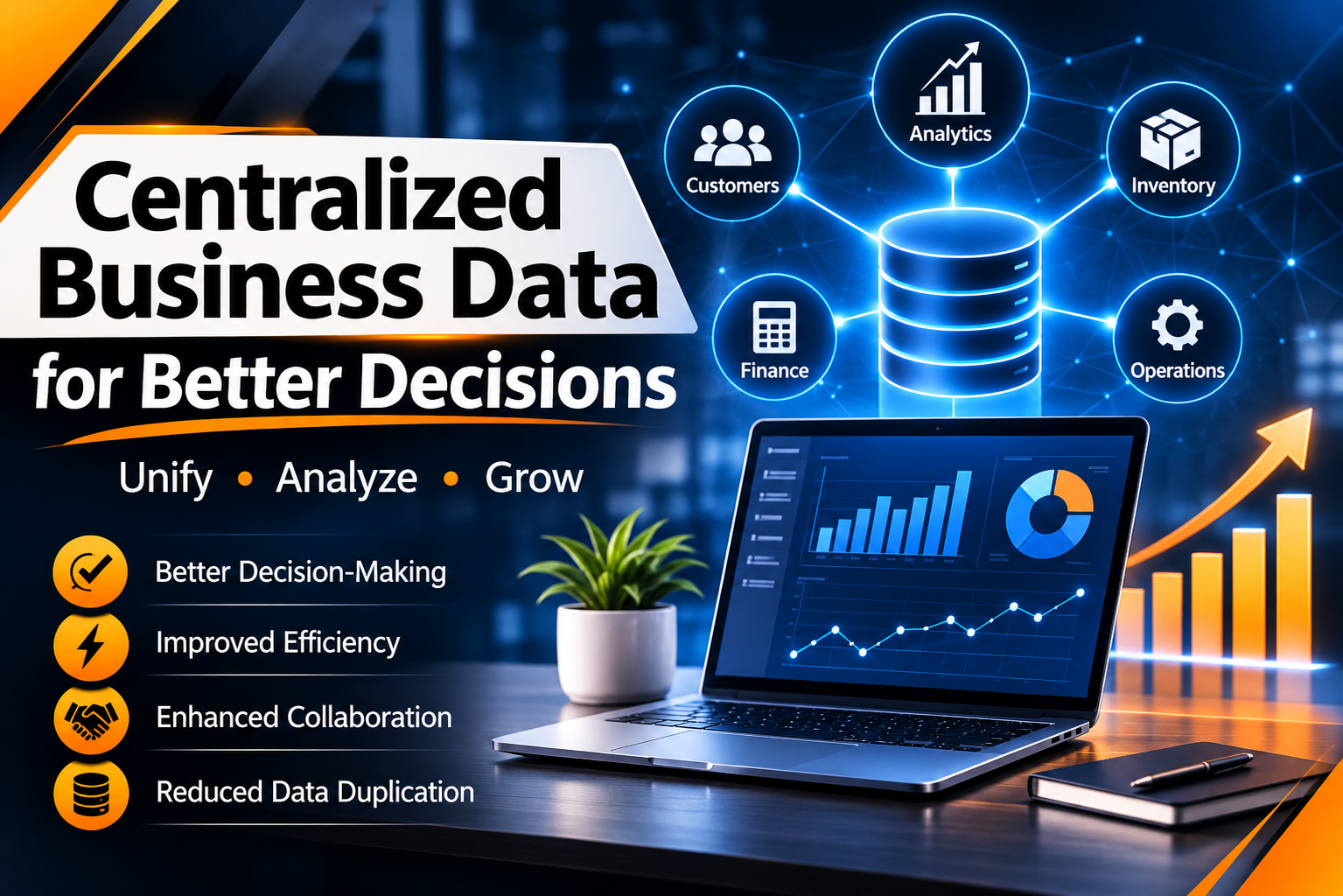
Centralized Business Data for Better Decisions
Introduction
Modern businesses generate large amounts of information through sales activities, customer interactions, financial transactions, inventory systems, and daily operations. When this information is stored across separate applications, spreadsheets, and departments, accessing accurate data can become difficult.
Data centralization helps organizations bring information from different sources into a unified system. It creates a more organized environment where employees and decision-makers can access relevant business information without switching between multiple disconnected platforms.
With properly developed software solutions, businesses can improve data accessibility, reduce information duplication, and make better decisions based on consistent and reliable records.
Explore professional software development solutions:
https://www.riotechsoftwares.com/softwaredevelopment.php
What Is Data Centralization?
Data centralization is the process of collecting and managing information from multiple sources through a common platform or centralized database.
Instead of maintaining separate records across different departments, organizations can use integrated software systems to organize business information in one accessible environment.
For example, a company may maintain customer details in a CRM, financial records in accounting software, and inventory information in a separate application. A centralized data solution can connect these systems and provide a more consistent view of business activities.
This approach helps improve information management and supports better coordination across departments.
Why Centralized Business Data Matters
Centralized business data provides organizations with a clearer understanding of their operations. It reduces the challenges associated with scattered information and supports more effective business management.
1. Better Decision-Making
Managers need accurate information to make operational and strategic decisions. Centralized data provides access to relevant business records, helping decision-makers evaluate performance and identify opportunities.
2. Improved Data Accessibility
When information is stored across disconnected platforms, employees may spend unnecessary time searching for records. A centralized system makes important information easier to locate and access according to assigned permissions.
3. Reduced Data Duplication
Maintaining the same information in multiple systems can create inconsistencies. Centralized data management helps reduce duplicate records and supports more reliable information across departments.
4. Better Departmental Collaboration
Different departments often depend on shared information to complete their work. Centralized systems improve information sharing between sales, finance, operations, customer support, and management teams.
5. Improved Operational Efficiency
Employees can access relevant records through connected applications rather than manually collecting information from different sources. This reduces repetitive work and improves workflow efficiency.
Learn more about customized software development:
https://www.riotechsoftwares.com/softwaredevelopment.php
Common Sources of Business Data
Organizations collect information from multiple business systems and operational activities. Understanding these sources is important when planning a centralized data management solution.
1. Customer Relationship Management Systems
CRM platforms store customer profiles, communication records, sales opportunities, and interaction histories. Centralizing this information helps businesses understand customer relationships more effectively.
2. Financial Management Applications
Financial applications manage invoices, payments, expenses, budgets, and transaction records. Integrating this information helps management monitor financial performance.
3. Inventory and Supply Chain Systems
Inventory platforms maintain stock levels, purchase records, supplier details, and order information. Centralized access helps businesses coordinate inventory-related activities.
4. Human Resource Management Systems
HR applications store employee information, attendance records, payroll details, and recruitment data. Centralized management improves access to workforce information.
5. Website and Application Data
Websites and business applications generate information about user interactions, enquiries, registrations, transactions, and service usage. This data can support customer analysis and operational planning.
Best Practices for Implementing Data Centralization
A structured implementation strategy helps businesses create a reliable centralized data environment.
Identify Business Data Sources: Review existing applications, databases, spreadsheets, and departmental records.
Define Data Management Requirements: Determine which information should be centralized and how different departments will use it.
Choose Suitable Software: Select or develop a solution that supports business requirements, integration, and future expansion.
Standardize Data Formats: Establish consistent naming conventions, formats, and validation rules.
Implement Access Controls: Assign permissions according to employee roles and responsibilities.
Integrate Existing Applications: Use appropriate APIs and integration methods to connect business systems.
Maintain Regular Backups: Protect centralized information through reliable backup and recovery procedures.
Monitor Data Quality: Review records regularly to identify duplicate, incomplete, and inaccurate information.
Customized software development can help businesses build centralized systems according to their operational requirements.
https://www.riotechsoftwares.com/softwaredevelopment.php
How Software Development Supports Data Centralization
Software development plays an important role in creating centralized business data solutions. Every organization has different operational workflows, applications, and information requirements. Customized software can be designed to connect these systems and organize business information effectively.
For example, a business may require a centralized dashboard that combines customer records, sales information, inventory details, and financial reports.
Software developers can create suitable database structures, application interfaces, APIs, and reporting features to support these requirements.
A well-developed solution can provide:
Centralized access to important business records.
Integration between existing applications.
Automated information synchronization.
Customized dashboards and reporting.
Secure user authentication and permissions.
Scalable database architecture.
These capabilities help businesses manage information more efficiently while supporting future technology requirements.
Frequently Asked Questions (FAQs)
1. What is centralized business data?
Centralized business data refers to information collected and managed through a common platform or database instead of being stored separately across multiple disconnected systems.
2. How does data centralization improve business decisions?
It provides decision-makers with easier access to consistent business information, helping them evaluate performance, identify trends, and make informed decisions.
3. What technologies are used for data centralization?
Common technologies include centralized databases, cloud platforms, APIs, data integration tools, data warehouses, and customized business applications.
4. Is data centralization suitable for small businesses?
Yes. Small businesses can centralize customer records, financial information, inventory, and operational data to improve organization and reduce manual work.
5. How does customized software help centralize business data?
Customized software connects different applications, organizes business records, automates data synchronization, and provides centralized dashboards based on specific organizational requirements.
Conclusion
Centralized business data helps organizations improve information accessibility, reduce duplication, and create a more organized approach to business management. By connecting information from different departments and applications, businesses can gain better operational visibility and make more informed decisions.
With suitable software development, system integration, data validation, and security controls, organizations can build centralized platforms that support their current requirements and future growth.
Explore customized software development solutions to create more connected and efficient business operations:
Recent Posts
06 Nov 2026
05 Nov 2026
03 Nov 2026