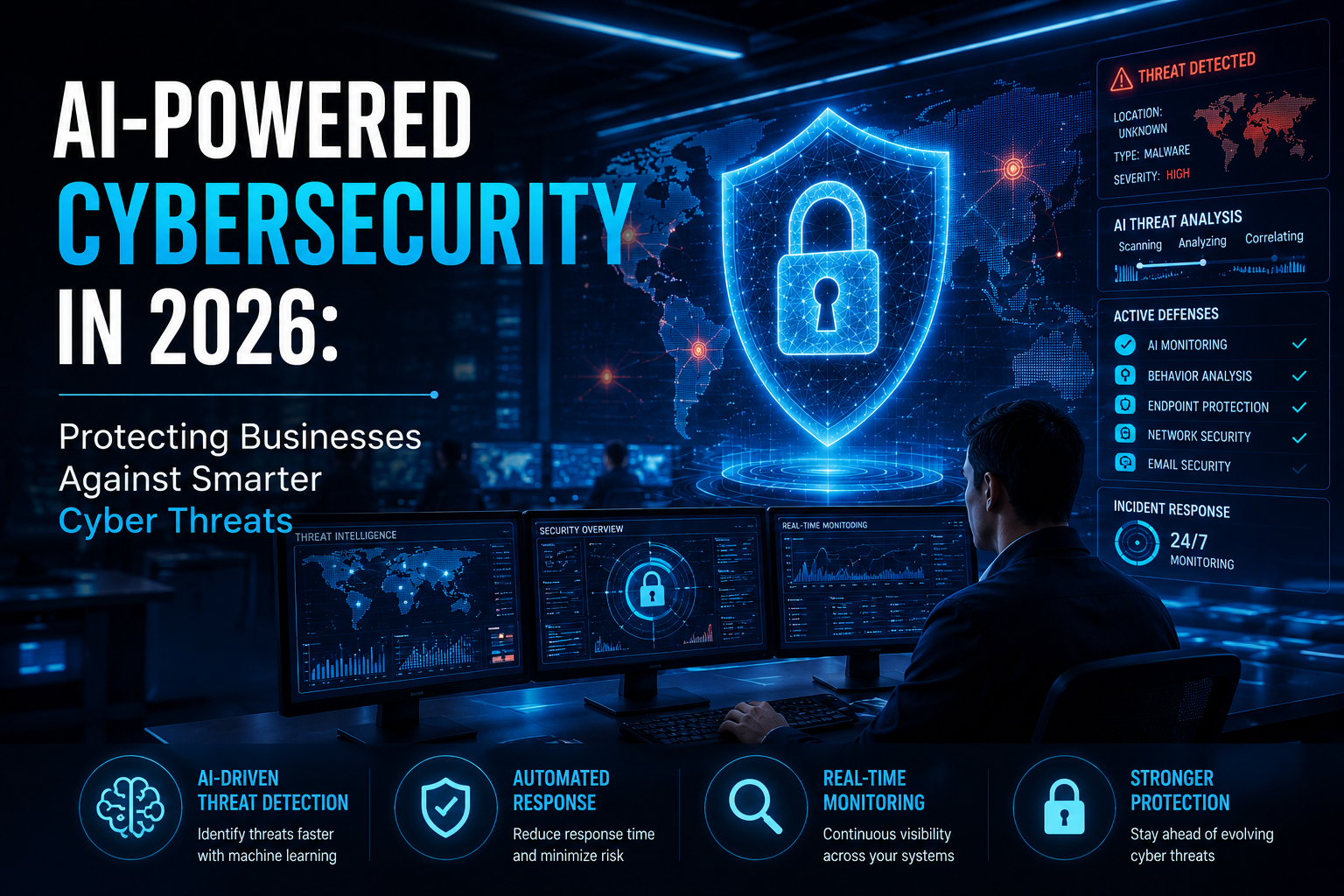
Preemptive Cybersecurity in 2026: Protecting Businesses Before Threats Strike
Preemptive Cybersecurity in 2026: Why Businesses Must Detect Threats Before They Strike
Cybersecurity is entering a new phase.
For years, many organizations focused heavily on detecting and responding to threats after suspicious activity had already occurred. In 2026, businesses are increasingly moving toward preemptive cybersecurity—using intelligence, automation, AI, and continuous monitoring to identify and reduce risks before they become major incidents.
Gartner lists preemptive cybersecurity among its strategic technology trends for 2026, reflecting the growing importance of proactive security in increasingly AI-driven digital environments.
What Is Preemptive Cybersecurity?
Preemptive cybersecurity focuses on identifying potential weaknesses and malicious activity before they result in significant damage.
Instead of asking:
“How do we respond after an attack?”
organizations increasingly need to ask:
“What can we detect and prevent before the attack succeeds?”
This approach combines technologies such as:
- Artificial intelligence
- Machine learning
- Threat intelligence
- Continuous monitoring
- Automated detection
- Identity security
- Vulnerability management
- Behavioral analytics
Why Traditional Security Approaches Are Changing
Modern organizations operate across cloud platforms, remote environments, SaaS applications, APIs, mobile devices, connected systems, and AI applications.
This creates a much larger attack surface.
At the same time, cyber threats are becoming more sophisticated. Gartner's 2026 cybersecurity guidance highlights the need for stronger governance and AI-specific security practices as organizations expand their use of AI.
A security strategy based only on responding to known incidents may therefore leave important gaps.
How AI Supports Proactive Cybersecurity
1. Continuous Threat Detection
AI-based systems can analyze large volumes of security data and identify patterns that may indicate suspicious activity.
2. Behavioral Analysis
Instead of relying only on known attack signatures, modern security systems can examine unusual user, device, and network behavior.
3. Faster Risk Identification
Automated systems can help security teams prioritize vulnerabilities and suspicious events based on potential business impact.
4. Automated Response
In carefully controlled environments, security automation can help isolate suspicious activity or trigger predefined response processes.
5. Threat Intelligence
Organizations can combine internal security signals with external threat intelligence to improve awareness of emerging risks.
Preemptive Cybersecurity and AI Security
The rise of enterprise AI introduces another layer of security requirements.
Businesses need to protect:
- AI models
- Training data
- Customer information
- API connections
- AI agents
- Access credentials
- Enterprise prompts and workflows
- Generated outputs
As AI systems become connected to business applications, security must be integrated into the architecture rather than treated as an afterthought.
The Role of Zero-Trust Security
Zero Trust remains an important foundation for modern security.
The principle is straightforward:
Never automatically trust a user, device, application, or connection simply because it is inside the organization's environment.
Instead, access should be continuously evaluated according to identity, permissions, context, and risk.
Key Benefits for Businesses
A proactive cybersecurity strategy can help organizations:
- Reduce security exposure
- Detect suspicious behavior earlier
- Improve incident response
- Protect sensitive information
- Strengthen business continuity
- Reduce operational disruption
- Improve security visibility
- Support regulatory and governance requirements
How Businesses Can Build a Preemptive Security Strategy
Step 1: Identify Critical Assets
Determine which systems, applications, data, and infrastructure are most important to business operations.
Step 2: Map the Attack Surface
Review cloud services, endpoints, APIs, applications, identities, and connected systems.
Step 3: Implement Continuous Monitoring
Security visibility should extend across critical infrastructure rather than relying on periodic checks.
Step 4: Use Automation Carefully
Automate repetitive detection and response tasks while maintaining human oversight for high-impact decisions.
Step 5: Strengthen Identity and Access
Use strong authentication, least-privilege access, and continuous verification.
Step 6: Test and Improve
Security strategies should be regularly evaluated through vulnerability assessments, incident simulations, monitoring reviews, and security testing.
The Future of Enterprise Cybersecurity
The future of cybersecurity is not simply about building stronger barriers.
It is about creating systems capable of anticipating risk, identifying anomalies, understanding context, and responding quickly.
As AI adoption accelerates, organizations will need security architectures that protect both traditional IT environments and emerging AI-powered systems.
FAQs
What is preemptive cybersecurity?
Preemptive cybersecurity is a proactive security approach focused on identifying vulnerabilities, suspicious activity, and potential threats before they result in major security incidents.
How does AI improve cybersecurity?
AI can analyze large volumes of security information, identify unusual patterns, support threat detection, prioritize risks, and automate selected security responses.
Why is cybersecurity important for AI systems?
AI applications can process sensitive business information and connect to enterprise systems. Weak security controls can therefore expose data, models, credentials, and business workflows.
Is Zero Trust part of proactive cybersecurity?
Yes. Zero Trust principles can support proactive security by continuously evaluating identities, devices, applications, and access requests rather than assuming implicit trust.
Conclusion
Cybersecurity strategies are shifting from reactive defense toward continuous, intelligence-driven protection.
For businesses in 2026, preemptive cybersecurity can become an important part of digital transformation. Organizations that combine AI-powered monitoring, strong identity controls, automation, governance, and human oversight can build a more resilient security environment.
Riotech helps organizations modernize their technology infrastructure with a focus on security, scalability, automation, and digital transformation. Get in touch with our team to explore a cybersecurity strategy aligned with your business needs.