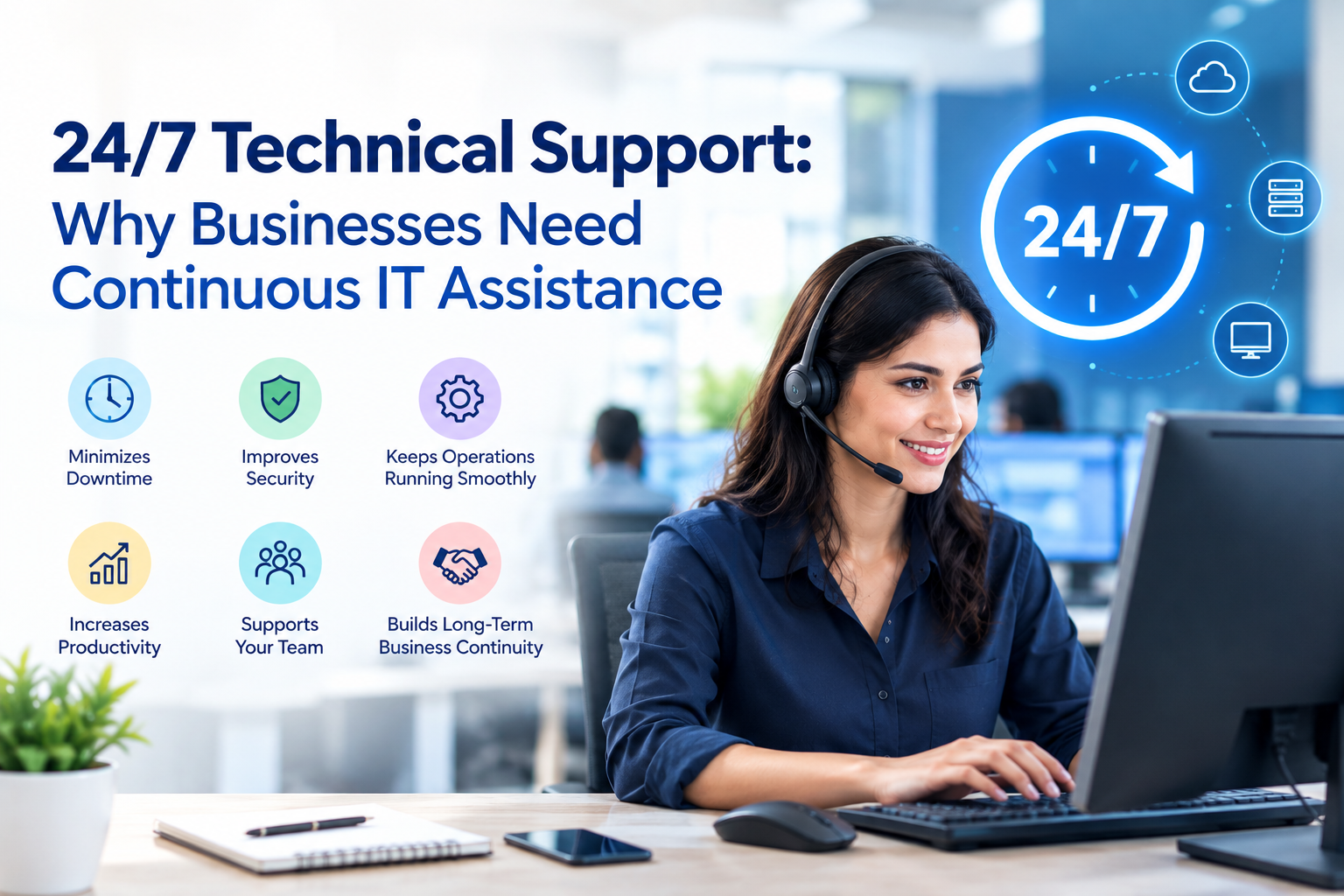
24/7 Technical Support: Why Businesses Need Continuous IT Assistance
24/7 Technical Support: Why Businesses Need Continuous IT Assistance
In today’s digital business environment, technology is no longer limited to a single department. Businesses depend on websites, cloud platforms, business applications, networks, databases, cybersecurity systems, and communication tools to operate efficiently. When a technical issue occurs, even a short period of downtime can affect productivity, customer experience, revenue, and business reputation.
This is why 24/7 technical support has become an important part of modern IT operations. Continuous IT assistance helps businesses identify problems quickly, reduce downtime, protect critical systems, and maintain reliable digital operations around the clock.
What Is 24/7 Technical Support?
24/7 technical support is an IT support model that provides assistance at any time of the day or night, including weekends and holidays. Depending on the service provider and support agreement, technical teams can monitor systems, troubleshoot incidents, resolve application issues, investigate network problems, and respond to critical IT alerts.
Unlike traditional support that operates only during business hours, 24/7 support provides continuous coverage for businesses operating across different time zones or running systems that cannot afford extended downtime.
Why Continuous IT Support Matters for Businesses
1. Minimizes Business Downtime
System failures can interrupt essential business operations. A server outage, software error, network problem, or cloud service disruption can prevent employees from accessing important applications and data.
With continuous technical assistance, issues can be investigated and addressed as soon as they occur, helping reduce the duration and potential impact of downtime.
2. Provides Faster Issue Resolution
Technical problems do not always happen during convenient working hours. Waiting until the next business day to report a critical issue can increase operational losses.
A 24/7 support team can respond to incidents immediately, helping businesses restore affected systems faster and keep essential operations running.
3. Supports Remote and Global Teams
Modern organizations often have employees, customers, partners, and infrastructure spread across multiple locations and time zones.
Continuous IT assistance ensures that technical support remains available regardless of where users or systems are located. This is particularly useful for companies with international operations and distributed teams.
4. Improves IT System Reliability
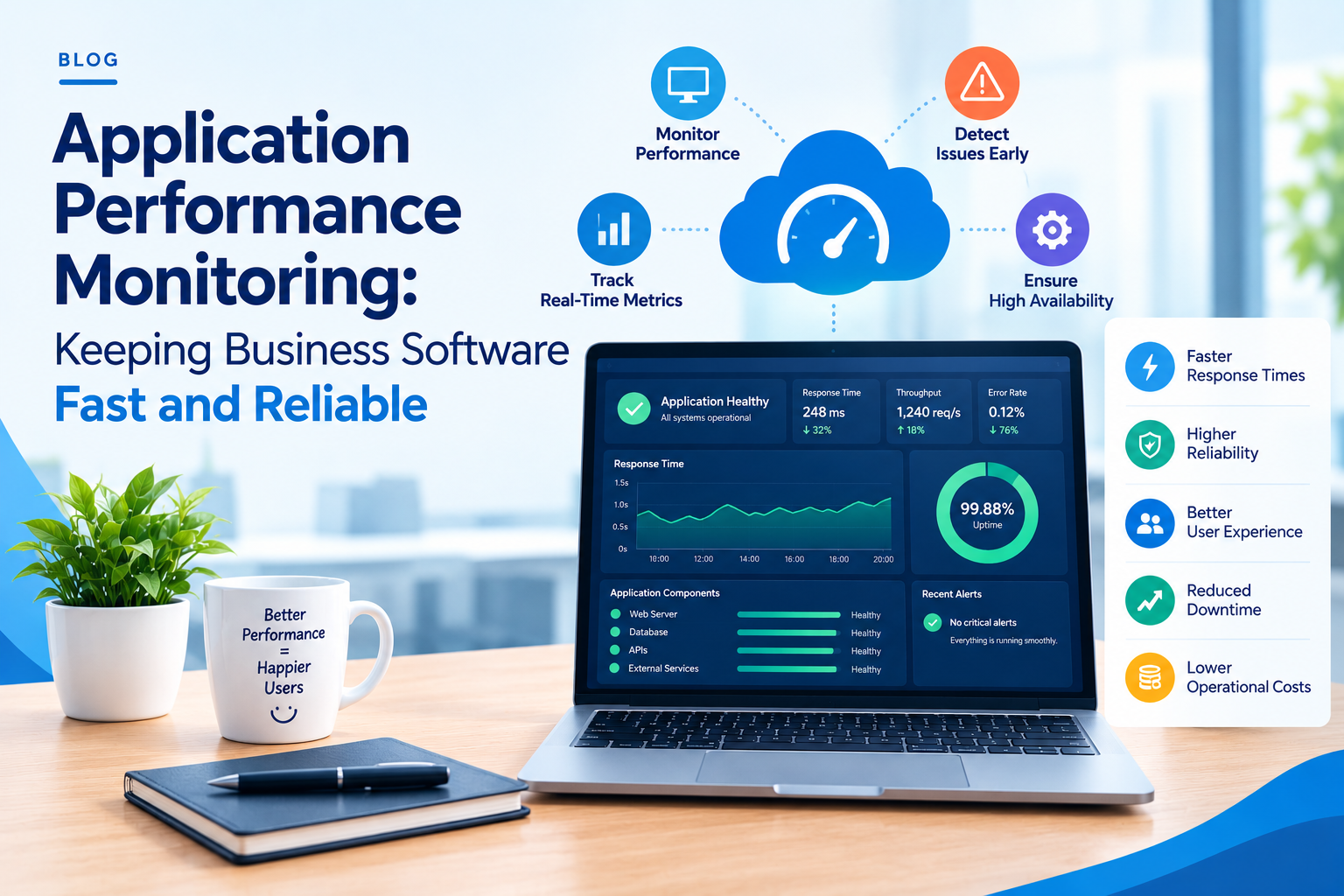
Continuous support is not only about fixing problems after they happen. Proactive monitoring can help identify unusual system behavior, performance issues, resource shortages, and potential failures before they become major incidents.
Regular monitoring and maintenance can contribute to greater system stability and more predictable IT performance.
5. Strengthens Cybersecurity Response
Cybersecurity incidents can occur at any time. Suspicious login attempts, malware activity, unauthorized access, and unusual network behavior may require immediate investigation.
Round-the-clock technical support can help organizations detect and respond to technical security issues more quickly. However, businesses should also maintain dedicated cybersecurity controls, policies, backups, and incident-response procedures.
6. Reduces Pressure on Internal IT Teams
Internal IT departments often manage multiple responsibilities simultaneously, from employee support and infrastructure maintenance to application management and security.
An external 24/7 support team can provide additional technical coverage, allowing internal teams to focus on strategic IT initiatives while routine and after-hours incidents receive appropriate attention.
7. Protects Customer Experience
Technology problems can directly affect customers. Website downtime, payment issues, application errors, or communication failures can create frustration and reduce trust.
Continuous IT assistance helps businesses respond to technical disruptions faster, supporting a more consistent customer experience.
What Can 24/7 Technical Support Include?
The exact services depend on the business and its IT environment, but continuous technical assistance may include:
- Server and infrastructure monitoring
- Network troubleshooting
- Cloud infrastructure support
- Application troubleshooting
- Website and system maintenance
- Database monitoring
- Backup and recovery assistance
- Software and hardware troubleshooting
- User and access support
- Performance monitoring
- Incident management
- Security alert investigation
- System updates and maintenance
A well-designed support model should be based on the organization's infrastructure, operational requirements, security needs, and service-level expectations.
24/7 Support vs. Traditional IT Support
Traditional IT support generally operates within defined business hours. This model may be suitable for organizations whose systems and employees operate within a limited schedule.
However, businesses with 24/7 operations, international customers, e-commerce platforms, cloud applications, critical databases, or distributed teams may require continuous support.
The right approach depends on the business rather than simply choosing the most extensive support model.
How to Choose the Right 24/7 IT Support Provider
Before selecting a technical support partner, businesses should consider several factors:
Technical Expertise
Check whether the provider has experience with the technologies, applications, cloud platforms, networks, and infrastructure used by your organization.
Response and Resolution Times
Understand the provider's service-level agreements, including expected response times for critical, high-priority, and routine incidents.
Monitoring Capabilities
Ask whether systems are monitored continuously and whether the provider can identify potential problems proactively.
Scalability
Your IT environment may grow as your business expands. Choose a support model that can accommodate additional users, applications, locations, and infrastructure.
Security Practices
Technical support providers should follow appropriate security procedures for access management, data protection, authentication, and incident handling.
Reporting and Communication
Clear incident reports, performance information, escalation procedures, and regular communication can make outsourced IT support easier to manage.
The Role of Proactive IT Support
The most effective technical support strategy is not simply about reacting to failures. Proactive IT support focuses on identifying potential issues before they become serious business disruptions.
Regular monitoring, system health checks, software updates, performance analysis, backup verification, and preventive maintenance can help organizations maintain a more stable IT environment.
This combination of proactive monitoring and responsive technical assistance provides businesses with a stronger approach to managing their technology infrastructure.
Why Businesses Are Moving Toward Continuous IT Assistance
As businesses become increasingly dependent on digital infrastructure, the cost of technical downtime can extend beyond temporary inconvenience. Operational delays, missed transactions, reduced productivity, customer dissatisfaction, and reputational damage can all result from unresolved technology problems.
For organizations where technology plays a critical role in daily operations, having access to technical assistance around the clock can provide greater operational continuity and faster incident response.
Conclusion
Technology problems do not follow a business schedule. A network failure, application error, server issue, or system outage can occur at any time. 24/7 technical support gives businesses access to continuous assistance when they need it, helping reduce downtime, improve system reliability, support distributed operations, and maintain a consistent customer experience.
For organizations that rely heavily on digital systems, continuous IT support can become an important part of a broader strategy for business continuity, infrastructure management, and operational efficiency.
Looking for Reliable IT Support?
Businesses need technology that works reliably around the clock. Riotech Softwares helps businesses manage their digital technology with professional IT, software, and technical support solutions designed around their operational requirements.
Explore more about Riotech Softwares and its technology solutions:
https://riotechsoftwares.com/