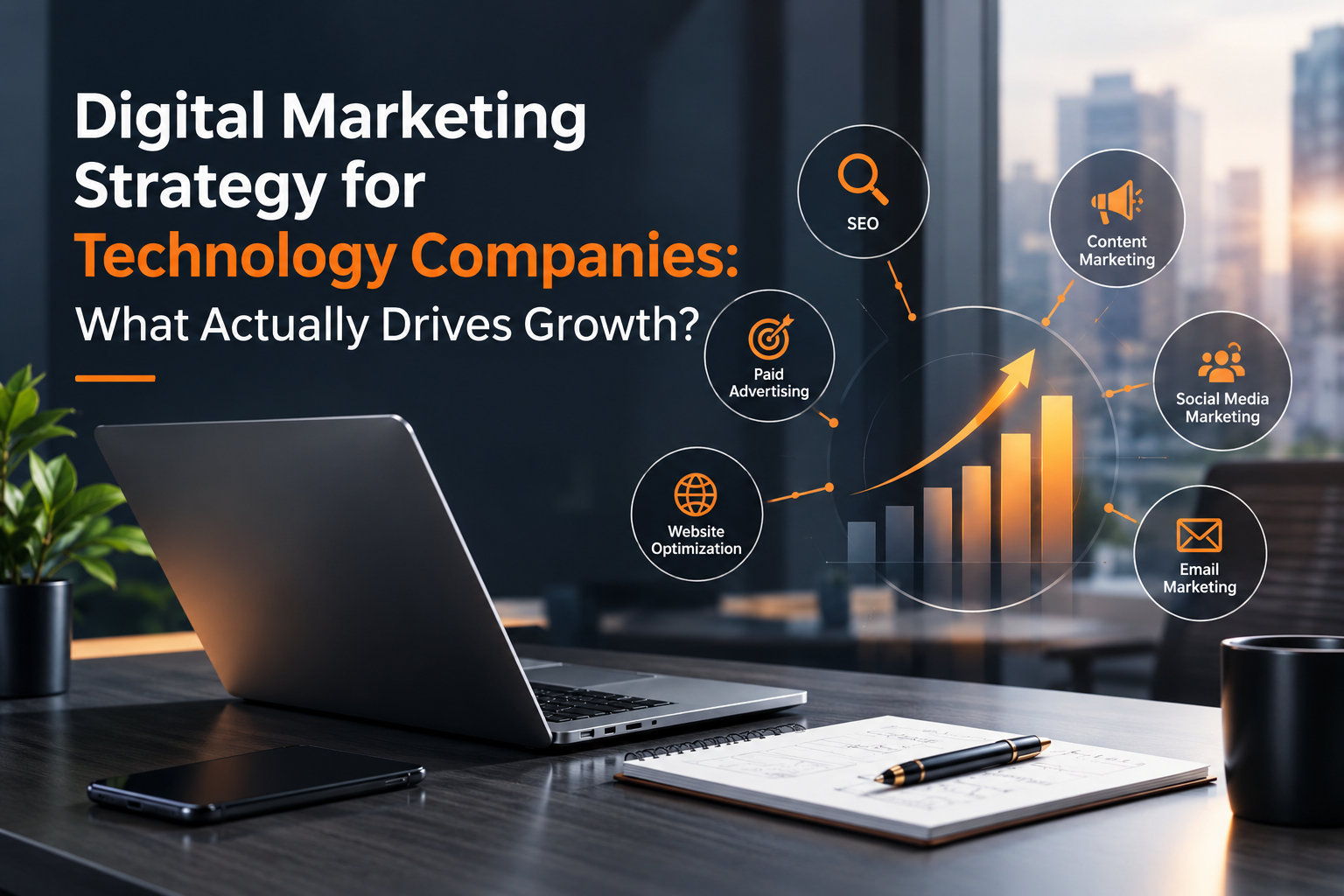
Digital Marketing Strategy for Technology Companies: What Drives Growth?
Digital Marketing Strategy for Technology Companies: What Actually Drives Growth?
Technology companies operate in one of the most competitive digital environments. Whether a business provides software development, AI solutions, cloud services, cybersecurity, mobile applications, IT consulting, or other technology solutions, having a strong digital presence is no longer optional.
However, simply publishing content, running advertisements, or maintaining social media profiles does not automatically generate business growth.
A successful digital marketing strategy for technology companies connects the right audience, the right message, the right channels, and measurable business objectives. In 2026, technology buyers are increasingly researching solutions independently before speaking with a sales team, making online visibility, expertise, and trust important parts of the buying journey.
What Makes Digital Marketing Different for Technology Companies?
Marketing a technology service is different from marketing a simple consumer product.
Technology buyers often want to understand:
- What problem does the solution solve?
- How does the technology work?
- What business value can it provide?
- Is the provider experienced?
- Is the solution secure and scalable?
- How does it compare with alternative solutions?
- Can the company provide reliable support?
This means technology companies need marketing that educates before it sells.
A strong strategy should therefore combine search visibility, useful content, social media, paid campaigns, conversion optimization, and continuous performance analysis.
1. Start With a Clearly Defined Target Audience
One of the biggest mistakes technology companies make is trying to market to everyone.
A better approach is to define an Ideal Customer Profile (ICP).
For example, a software company may target:
- Startups looking for custom software
- SMEs requiring business automation
- Enterprises seeking cloud solutions
- E-commerce businesses needing technology support
- Financial companies requiring secure digital solutions
- Healthcare organizations adopting digital systems
Understanding the audience helps determine the keywords, content topics, advertising platforms, messaging, and calls to action used throughout the marketing strategy.
The channel should follow the audience and business objective—not the other way around.
2. Build a Strong SEO Foundation
Search engine optimization remains an important part of long-term digital visibility.
For technology companies, SEO should go beyond targeting broad keywords such as "software development company."
A comprehensive strategy can include:
- Service-based keywords
- Industry-specific keywords
- Location-based keywords
- Problem-based searches
- Long-tail keywords
- Comparison searches
- Informational queries
For example, instead of focusing only on "digital marketing," a company could target more specific searches such as:
Digital Marketing Services for Technology Companies
B2B Technology Digital Marketing Services
SEO Services for Software Companies
Digital Marketing Agency for IT Companies
The goal is to attract users who have a genuine connection to the company's services and are more likely to move toward an inquiry or consultation.
3. Create Content That Demonstrates Expertise
Technology buyers often conduct extensive research before making purchasing decisions. Current B2B technology marketing research highlights the importance of expert content, clear positioning, and sales-aligned information rather than simply increasing content volume.
Instead of publishing generic articles, technology companies should create content around real customer questions and business challenges.
Useful content formats include:
- Industry guides
- Technical explainers
- Case studies
- Service pages
- Comparison articles
- Implementation guides
- Frequently asked questions
- Technology trend articles
- Problem-solving blogs
- Whitepapers and reports
For example, a cybersecurity company could publish:
How to Build a Cybersecurity Strategy for a Growing Business
A cloud service provider could create:
Cloud Migration Checklist for Small and Medium-Sized Businesses
This type of content can attract relevant visitors while positioning the company as a knowledgeable technology partner.
4. Use Social Media for Trust and Brand Visibility
Social media should not be treated only as a platform for promotional posts.
For technology companies, platforms such as LinkedIn can be used to communicate:
- Industry insights
- Product updates
- Client success stories
- Company expertise
- Technology trends
- Educational content
- Team knowledge
- Case studies
- Business solutions
The objective is to create familiarity and credibility with potential customers.
Consistent educational content can also help technology brands remain visible throughout long buying cycles.
5. Use Paid Advertising With a Clear Objective
Paid advertising can accelerate visibility, but campaigns should have a defined business objective.
Depending on the target audience and service, companies may use:
- Google Search Ads
- Display campaigns
- LinkedIn advertising
- Remarketing
- Lead-generation campaigns
- Conversion-focused landing pages
For example, a company offering enterprise software may use search advertising to reach users actively looking for a specific solution.
However, generating clicks should not be the final objective.
The campaign should ultimately be evaluated through meaningful metrics such as:
Qualified Leads → Sales Opportunities → Customers → Revenue
6. Optimize Landing Pages for Conversion
Driving traffic to a website is only one part of digital marketing.
If visitors cannot quickly understand what a company offers, why it matters, and what action they should take next, valuable traffic may not convert.
A technology service landing page should clearly communicate:
- The problem being addressed
- The proposed solution
- Key benefits
- Relevant services or features
- Proof of expertise
- FAQs
- Trust signals
- A clear call to action
For example:
Request a Consultation
Get a Project Estimate
Talk to Our Technology Experts
Schedule a Strategy Call
The CTA should match the visitor's stage in the buying journey.
7. Align Marketing With Sales
Marketing and sales should not operate as separate departments.
A marketing campaign may generate hundreds of leads, but the real question is whether those leads are relevant and commercially valuable.
Marketing teams should work with sales teams to understand:
- Which leads become customers
- Which industries convert better
- Which services generate inquiries
- What objections prospects raise
- Which content helps sales conversations
- Where prospects drop out of the funnel
This feedback can be used to improve future campaigns.
8. Track the Metrics That Matter
Traffic and social media followers can be useful indicators, but they do not tell the complete story.
Technology companies should monitor metrics such as:
| Marketing Area | Important Metrics |
|---|---|
| SEO | Organic traffic, rankings, qualified traffic |
| Content | Engagement, conversions, assisted conversions |
| Social Media | Reach, engagement, profile visits, inquiries |
| Paid Ads | CTR, CPC, conversion rate, qualified leads |
| Website | Engagement, landing-page conversion rate |
| Lead Generation | MQLs, SQLs, lead quality |
| Sales | Opportunities, customers, revenue |
| Overall Marketing | Customer acquisition cost and ROI |
The objective is to understand which marketing activities contribute to business outcomes.
9. Use Data to Continuously Improve the Strategy
Digital marketing should not be treated as a one-time campaign.
Technology companies operate in changing markets where customer behavior, competitors, search trends, platforms, and technology itself continue to evolve.
A practical optimization cycle looks like this:
Research → Plan → Launch → Measure → Analyze → Optimize → Repeat
For example, if an SEO page receives significant impressions but few clicks, its title and description may need improvement.
If a landing page receives traffic but generates few leads, the messaging, page structure, offer, or CTA may need optimization.
If an advertising campaign generates many leads but few qualified opportunities, audience targeting and campaign messaging may need to be reviewed.
10. Build a Connected Digital Marketing Ecosystem
The strongest technology marketing strategies do not depend on a single channel.
- SEO can generate long-term organic visibility.
- Content marketing can educate potential customers.
- Social media can strengthen brand awareness.
- Paid advertising can capture high-intent demand.
- Email marketing can support lead nurturing.
- Analytics can show what is working.
- Together, these channels create a connected marketing ecosystem.
What Actually Drives Growth for Technology Companies?
There is no single marketing tactic that guarantees growth.
Sustainable digital growth generally comes from combining several fundamentals:
Clear Positioning
Customers need to understand what your company does and why your solution is relevant.
Relevant Visibility
Your business needs to appear where potential customers are searching and researching.
Valuable Expertise
Useful, credible content can help build trust before the sales conversation begins.
Strong Conversion Paths
Traffic needs to have a clear path toward an inquiry, consultation, demo, or other business action.
Consistent Optimization
Campaigns should be continuously measured and improved using reliable data.
Sales and Marketing Alignment
Marketing performance becomes more meaningful when it is connected to qualified opportunities and revenue.
How RioTech Softwares Can Support Technology-Focused Digital Marketing
For businesses looking to strengthen their online presence, RioTech Softwares provides digital marketing solutions focused on SEO, social media marketing, performance marketing, Google Ads campaigns, and content marketing. The company's digital marketing service is designed around improving online visibility, generating traffic, developing leads, and supporting business growth.
Businesses can explore RioTech's digital marketing solutions here:
Digital Marketing Services by RioTech Softwares
Whether the objective is improving organic visibility, building a stronger social media presence, running targeted advertising campaigns, or developing a more structured digital growth strategy, the right approach begins with understanding the business, its audience, and its measurable objectives.
Conclusion
Digital marketing for technology companies is no longer about simply being present online. It is about building a system that connects visibility, expertise, trust, engagement, conversion, and measurable business outcomes.
Technology companies that understand their customers, create useful content, optimize their digital channels, and continuously analyze performance can build a stronger foundation for sustainable online growth.
The key is not doing more marketing activities.
It is building a clear, connected, and data-driven digital marketing strategy that supports real business goals.
Frequently Asked Questions
1. What is a digital marketing strategy for a technology company?
A digital marketing strategy for a technology company is a structured plan for reaching potential customers through channels such as SEO, content marketing, social media, paid advertising, email marketing, and conversion-focused websites.
2. Why is SEO important for technology companies?
SEO can help technology companies increase organic visibility when potential customers search for services, solutions, products, or answers to technology-related problems.
3. What type of content should technology companies publish?
Technology companies can publish educational blogs, technical guides, case studies, industry insights, comparison content, FAQs, implementation guides, and solution-focused content.
4. How can technology companies measure digital marketing success?
Success can be evaluated through qualified leads, conversion rates, organic visibility, advertising performance, sales opportunities, customer acquisition costs, and revenue contribution rather than traffic alone.
5. Should technology companies use paid advertising and SEO together?
They can complement each other. SEO can support long-term organic visibility, while paid advertising can provide targeted visibility for specific campaigns and high-intent searches.
6. How can a technology company improve its digital marketing strategy?
Start by defining the target audience, establishing clear positioning, researching customer needs, developing relevant content, improving SEO and conversion paths, tracking meaningful metrics, and continuously optimizing campaigns based on performance.