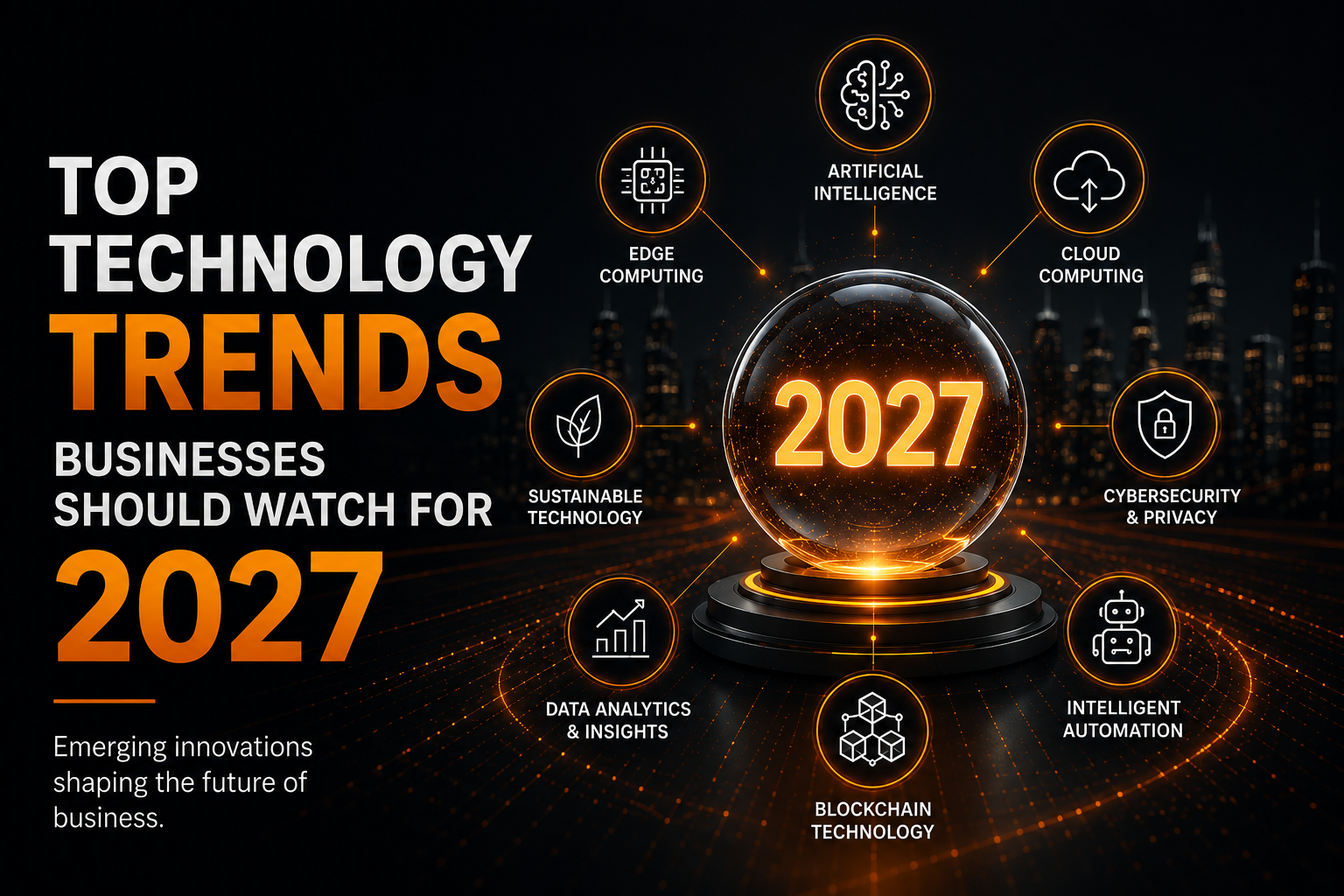
Top Technology Trends Businesses Should Watch for 2027
Top Technology Trends Businesses Should Watch for 2027
Technology is evolving faster than ever, and businesses that want to remain competitive in 2027 will need to look beyond short-term technology hype. Artificial intelligence, automation, cloud computing, cybersecurity, and intelligent software development are increasingly becoming interconnected parts of modern business strategy.
Current industry research indicates that agentic AI, AI-native development, AI security, physical AI, cloud infrastructure, and cybersecurity are among the areas expected to have significant business impact in the coming years.
For businesses, the goal should not simply be to adopt every emerging technology. Instead, organizations should identify technologies that can improve productivity, reduce operational costs, strengthen security, enhance customer experiences, and create measurable business value.
Here are the key technology trends businesses should watch as they prepare for 2027.
1. Agentic AI and Autonomous Business Workflows
Generative AI has already changed how businesses create content, analyze information, and interact with customers. The next stage is agentic AI, where AI systems can plan tasks, use tools, interact with business systems, and execute multi-step workflows with limited human intervention.
Unlike traditional AI applications that primarily respond to individual prompts, AI agents can potentially manage complete processes.
For example, an AI-powered customer service workflow could:
- Receive a customer request
- Analyze customer information
- Retrieve relevant records
- Determine the appropriate response
- Update a CRM system
- Generate a response
- Escalate complex cases to an employee
Industry research increasingly identifies agentic AI as a major enterprise trend for 2027 and beyond.
Why it matters
Businesses can use agentic AI to automate repetitive processes, accelerate decision-making, and allow employees to focus on higher-value activities.
However, organizations will also need strong access controls, monitoring, governance, and human oversight because autonomous systems introduce new security and operational risks.
2. AI-Native Software Development
AI is changing software development itself.
Instead of treating AI as an additional tool, organizations are increasingly designing applications, development processes, testing environments, and workflows around AI capabilities.
AI-native development can support:
- Automated code generation
- Intelligent software testing
- Code optimization
- Automated documentation
- Bug detection
- Application monitoring
- AI-assisted DevOps
- Faster application prototyping
Gartner's strategic technology outlook highlights AI-native development platforms as an important technology direction, while Deloitte identifies the restructuring of technology organizations around AI as a major emerging trend.
For businesses, this could result in faster development cycles and more efficient software teams.
3. Cloud Modernization and Hybrid Cloud
Cloud computing will remain a fundamental component of digital transformation in 2027.
However, the focus is shifting from simply moving applications to the cloud toward modernizing infrastructure and selecting the right environment for each workload.
Businesses are increasingly combining:
Cloud + AI + Data + Automation
to create scalable digital platforms.
Hybrid cloud architectures can help organizations balance flexibility, performance, security, compliance, and cost requirements.
Modern cloud strategies can support:
- Scalable applications
- AI workloads
- Data analytics
- Disaster recovery
- Remote collaboration
- Automated infrastructure
- Application modernization
Organizations should therefore evaluate whether their existing infrastructure can support the increasing computational and data requirements of AI-driven applications.
4. AI-Powered Cybersecurity
As organizations adopt AI, attackers are also using AI to create more sophisticated threats.
This makes cybersecurity one of the most important technology priorities for 2027.
AI can help security teams detect unusual activity, identify potential vulnerabilities, analyze large volumes of security data, and respond to threats faster.
At the same time, businesses must protect AI systems themselves from threats such as:
- Prompt injection
- Data leakage
- Model manipulation
- Unauthorized AI agents
- Identity and access abuse
- AI-generated phishing
- Automated cyberattacks
Gartner has highlighted agentic AI governance and AI-related attack surfaces as important cybersecurity concerns, while the World Economic Forum emphasizes the need for continuous verification, strong identity controls, and zero-trust principles for AI agents.
In 2027, cybersecurity should be treated as part of digital transformation rather than as a separate IT function.
5. Physical AI and Intelligent Robotics
AI is increasingly moving beyond software and into the physical world.
Robotics, autonomous systems, computer vision, and intelligent machines are creating new opportunities across manufacturing, logistics, healthcare, retail, and other industries.
For example, businesses may use intelligent machines for:
- Warehouse automation
- Inventory management
- Quality inspection
- Predictive maintenance
- Manufacturing operations
- Logistics
- Industrial monitoring
Deloitte and Forrester both identify the movement of AI into physical environments as an important technology development.
While physical AI may not be relevant to every organization immediately, businesses operating in asset-intensive industries should closely monitor its development.
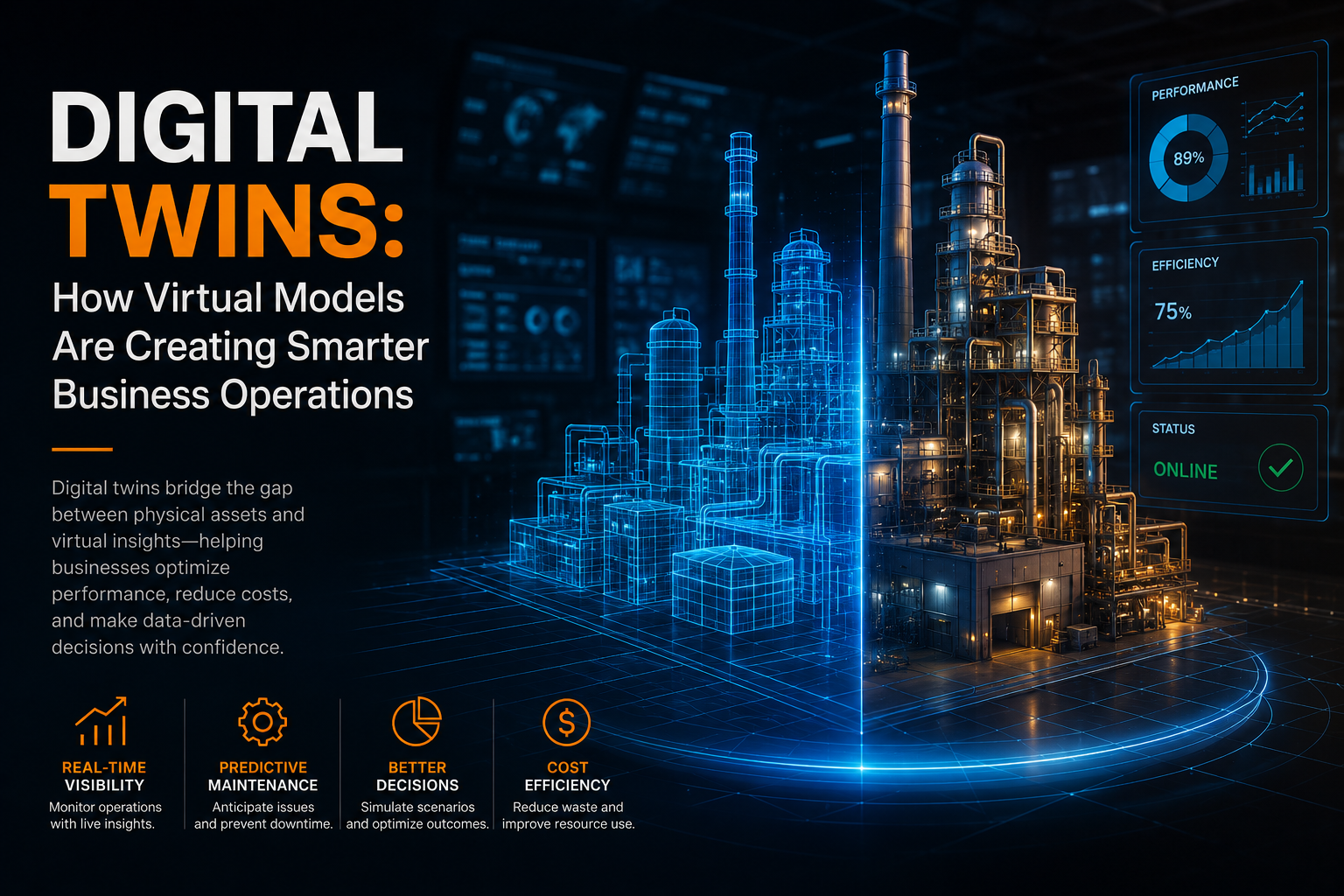
6. Edge Computing and Real-Time Intelligence
Cloud computing provides centralized processing, but some applications require decisions to happen closer to where data is generated.
This is where edge computing becomes important.
Edge computing processes data closer to devices, sensors, machines, or users instead of sending everything to a centralized cloud environment.
This can be particularly valuable for:
- IoT systems
- Smart manufacturing
- Connected vehicles
- Retail analytics
- Healthcare monitoring
- Industrial automation
- Real-time security systems
As AI becomes more embedded in operational environments, businesses may increasingly combine cloud and edge infrastructure to achieve the right balance between speed, scalability, and cost.
7. Intelligent Business Automation
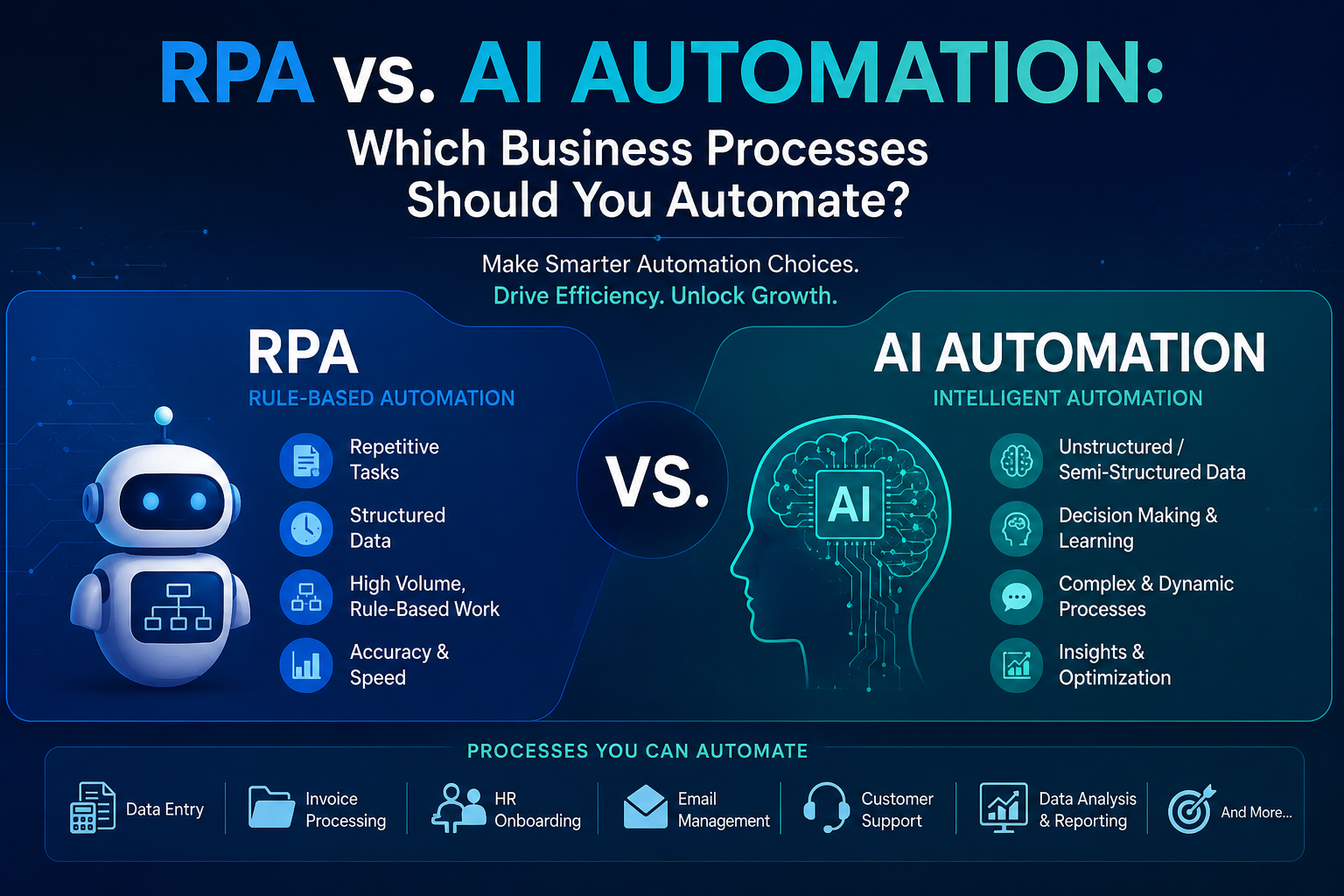
Automation is moving beyond simple rule-based tasks.
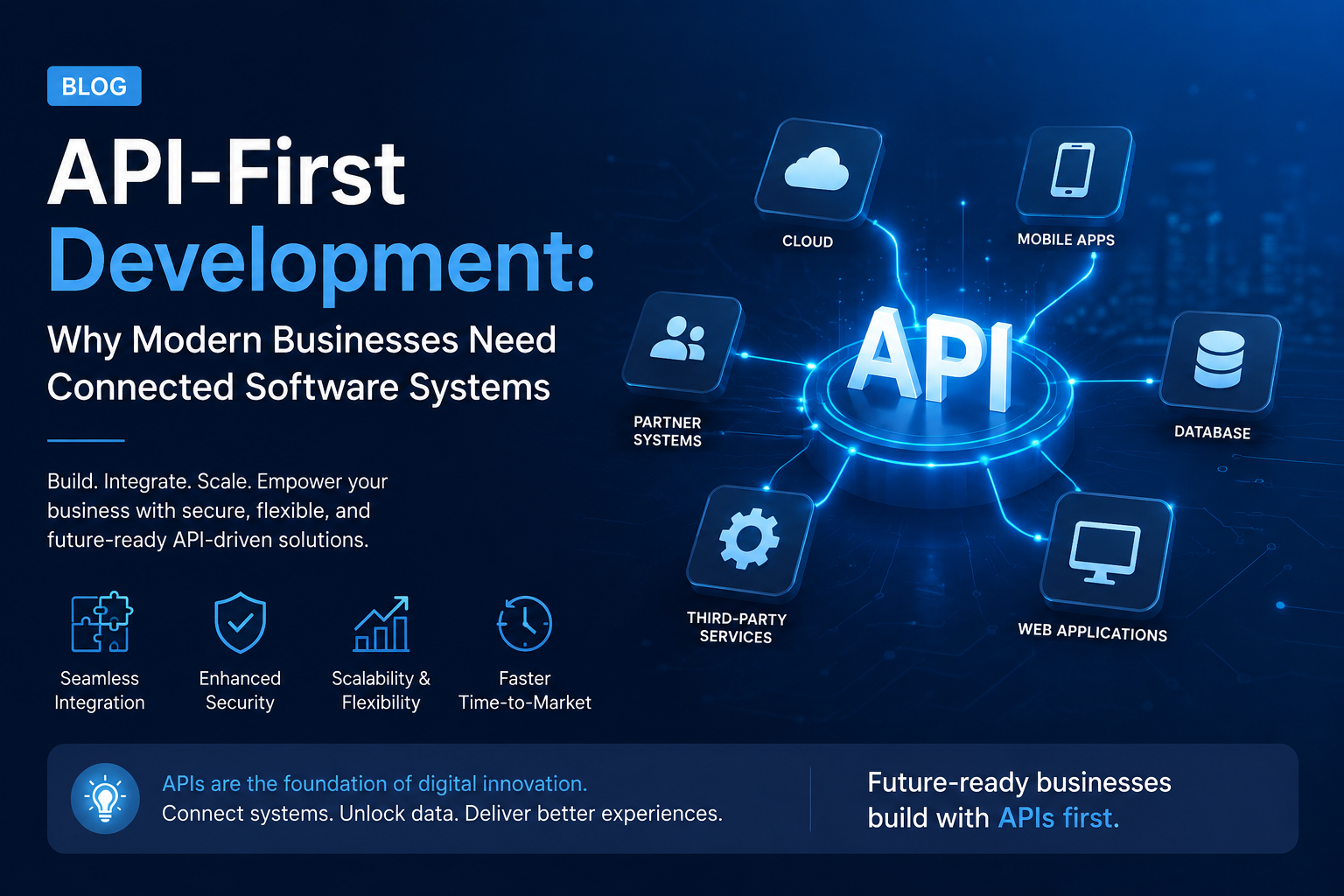
The combination of AI, robotic process automation, APIs, workflow platforms, and business intelligence is creating more intelligent automation systems.
Businesses can automate processes such as:
- Invoice processing
- Customer onboarding
- Lead management
- Data entry
- Reporting
- Employee workflows
- Document processing
- Customer support
The important shift is from automating individual tasks to automating complete business processes.
This can help organizations reduce manual work, improve consistency, and increase operational efficiency.
8. Data-Centric AI and Real-Time Analytics
AI is only as effective as the data behind it.
As businesses deploy more AI applications, data quality, accessibility, governance, and security will become increasingly important.
Organizations will need modern data architectures capable of supporting:
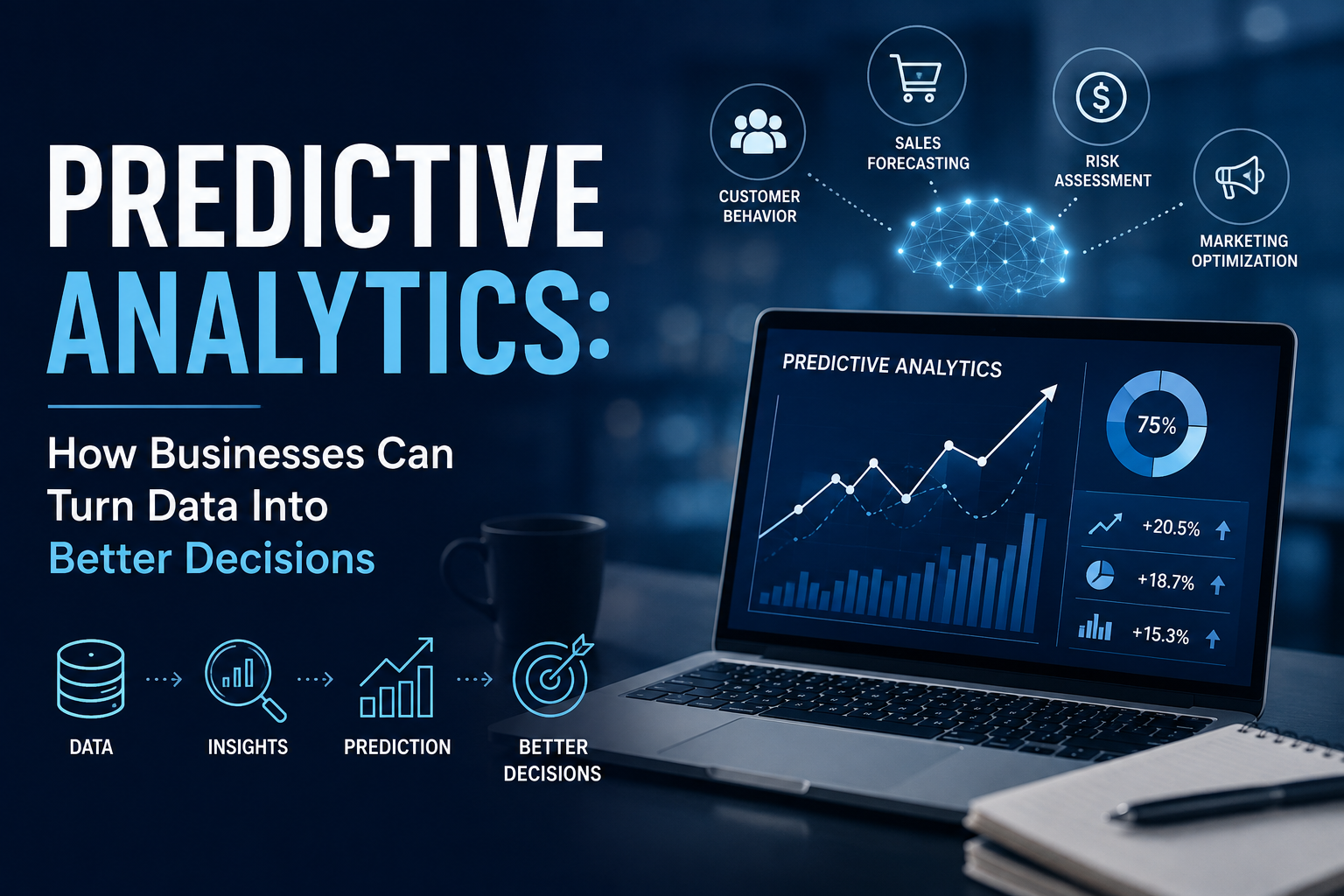
- Real-time analytics
- Predictive analytics
- AI applications
- Business intelligence
- Customer personalization
- Automated decision-making
Businesses that establish reliable data foundations will be better positioned to scale AI across departments.
The competitive advantage in 2027 will not simply come from having access to an AI model. It will increasingly come from having high-quality proprietary data and the infrastructure to use it effectively.
9. Confidential Computing and Privacy-First Technology
As businesses process increasingly sensitive information through cloud and AI systems, data protection will become even more important.
Confidential computing is designed to protect data while it is being processed by using hardware-based trusted execution environments.
This can be particularly valuable for industries handling sensitive information, including:
- Financial services
- Healthcare
- Government
- Enterprise technology
- Legal services
Confidential computing is already appearing in strategic technology forecasts, reflecting the growing importance of privacy and trusted computing environments.
Businesses should monitor privacy-enhancing technologies as regulations and customer expectations around data protection continue to evolve.
10. AI Governance and Responsible Technology
As AI becomes more deeply integrated into business operations, governance will become just as important as implementation.
Organizations need clear policies covering:
- Data usage
- AI model selection
- Security
- Human oversight
- Access permissions
- Compliance
- Monitoring
- Risk management
- Transparency
The growth of autonomous AI agents makes governance particularly important because these systems may have access to business applications and sensitive information.
Businesses should establish clear accountability before allowing AI systems to operate independently.
How Businesses Can Prepare for 2027
Technology adoption should be strategic rather than reactive.
Businesses preparing for 2027 should consider the following approach:
1. Identify Business Problems First
Do not adopt technology simply because it is trending. Start by identifying operational challenges, customer problems, and growth opportunities.
2. Build an AI-Ready Data Foundation
Review data quality, accessibility, governance, security, and integration before scaling AI initiatives.
3. Modernize Legacy Applications
Legacy systems can limit automation, analytics, and AI adoption. Modernization can help businesses create a more flexible technology foundation.
4. Strengthen Cybersecurity
AI adoption should be accompanied by stronger identity management, access controls, monitoring, threat detection, and security governance.
5. Start With High-Value Use Cases
Prioritize use cases where technology can generate measurable improvements in revenue, productivity, customer experience, or operational efficiency.
6. Measure ROI
The next phase of enterprise technology adoption will increasingly focus on measurable outcomes rather than experimentation. Current industry commentary also highlights the growing pressure on organizations to demonstrate tangible returns from AI investments.
The Future Is Not About One Technology
One of the biggest mistakes businesses can make is viewing emerging technologies independently.
The real transformation will come from combining multiple technologies.
For example:
AI + Cloud + Data + Automation + Cybersecurity
can create intelligent, scalable, and secure digital platforms.
Similarly:
IoT + Edge Computing + AI + Analytics
can create real-time intelligent operational systems.
The businesses that succeed in 2027 are likely to be those that build an integrated technology strategy rather than investing in isolated tools.
Conclusion
2027 is expected to bring a significant shift from technology experimentation toward practical business transformation.
Agentic AI, AI-native development, cloud modernization, intelligent automation, AI-powered cybersecurity, edge computing, physical AI, real-time analytics, and privacy-enhancing technologies are among the areas businesses should monitor closely.
However, technology adoption should always be connected to business objectives.
The organizations best positioned for the future will not necessarily be those using the most technologies. They will be the ones that choose the right technologies, integrate them effectively, protect their systems, and convert innovation into measurable business value.
For businesses looking to modernize applications, build scalable digital platforms, implement AI, or automate operations, explore the technology and software development solutions offered by Riotech Softwares.
Frequently Asked Questions
What is the most important technology trend for businesses in 2027?
Agentic AI is expected to be one of the most important trends because it can move AI from answering questions toward executing multi-step business workflows.
Will AI replace traditional business software?
AI is more likely to transform how business software is developed and used. Traditional applications will increasingly integrate AI capabilities, automation, intelligent analytics, and AI agents.
Why is cybersecurity important for AI adoption?
AI introduces new attack surfaces, data risks, and autonomous system risks. Strong security and governance are therefore essential when deploying AI at scale.
Should small businesses invest in emerging technologies?
Yes, but selectively. Small businesses should focus on technologies that solve specific problems and provide measurable improvements rather than adopting technology simply because it is new.
How can businesses prepare for technology changes in 2027?
Businesses should modernize legacy systems, improve data infrastructure, strengthen cybersecurity, evaluate AI use cases, automate repetitive processes, and develop a technology roadmap aligned with business goals.
Ready to build a future-ready technology strategy? Explore Riotech Softwares for modern software development, cloud, AI, and digital transformation solutions.